notebook for the ages ♒︎

Showing posts with label food waste. Show all posts

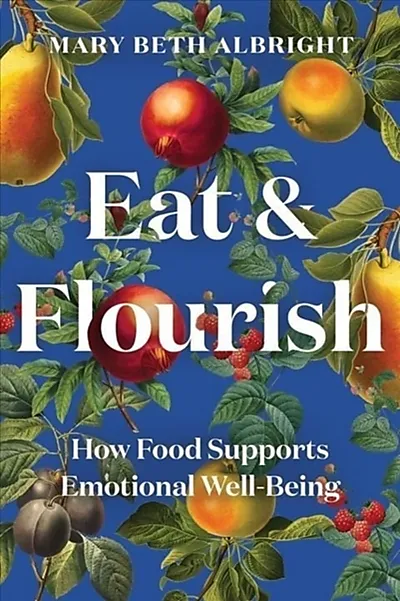
Eat & Flourish: How Food Supports Emotional Well-Being (2022) by Mary Beth Albright

I don't tend to write a lot of reviews of non-fiction books because how should I even do that when I cannot even start to question what is being said. I can comment on how it is being shared and the focus of the book, but that's not very interesting when I choose to pick up the books for the information I hope they can offer me. I picked up this book in hope of finding some ways to improve my gut health and emotional wellbeing, and that is what I got. I loved learning more about how the human body works and which foods supports which processes and moods in the body based on scientific studies. Overall, I will bring with me this knowledge into the future in the hopes of creating better eating patterns for myself. This book advocates for a mediterrian style diet with focus on whole foods, fermented foods and a higher intake of fiber. As well as, cooking and eating with somone instead of alone. Community is a way of strenghtening our emotional wellbeing, and cooking let us use all our senses. Maybe there's some truth to the saying "food is medicine" when it contains benefitical ingredients, pleasure and community.

Here are some of the highlights and main takeaways I got from the book. I share these in hope that they may help you too!


What can food do?

* Moderate our responses to stress, anger, anxiety, sadness, and so on. 

* Reduce and induce inflammation in the body and brain

* Long-term eating patterns can set us up for long-term well-being


A Healthy relationship with food

* Includes pleasure, and how and what we eat.

* Is sustainable long-term.

* Is not just about how many calories and nutrients a person eats in a day.

* Includes a regular eating pattern.

* Knows that everyone are different, and that if several people eat and exercised the exact same every day, they would still not look the same.

* It's a journey.


Food  Emotions

* Emotions impacts what and how we eat, and what and how we eat impacts our emotions. When we feel down or distressed we are more likely to make food choices that are bad for our mood, and further enhance the circle. However, the idea of neuroplasticity includes that our eating habits\patterns can change and start working more in our favore if we change to foods that better support us and our moods. Which comes first (food or emotions) is hard to say, but they impact each other both ways. 

* Mood impacts how we experience food and factors like the intensity of taste and flavor, and more. The same goes for the color of the food, how it is served and the texture of the food. Food may taste sweeter if you're happy, while they may taste more bitter if your favorite sports team just lost their game. Depression may cause a preferance for sugar and enhance sweet and bitter flavors. Anxiety is directly related to our perception of taste (based on altered serotonin and noradrenaline levels in our body).

* How the food is presented impacts our experience of sweetness. Coffee tastes better in a white cup than a blue. Desserts taste sweeter on a round plate than a square plate, on a white plate than a black plate. We expect food and drinks with stronger colors to taste more intensely.

* How we eat matters. Eating with people and using mealtime as a mean of strenghtening community helps. Verbalizing how we feels makes the emotions less intense, as well as strenghten our sense of belonging. Eating alone and being lonely negatively affects our health. The risk for heart disease increases.

* Planning, buying groceries and cooking for ourselves and other people are all healthy habits. They may create good feelings as we associate each action with people we like, taking care of loved ones, being selective about which produce we get, making us feel like we're picking especially good ingredients.

* Your body may need more of certain nutrients when it is experiencing certain emotional states. For example, if you're often stressed you may eat more magnesium-rich foods, or if you're sad, zinc.

* Hanger is your body telling you you're hungry, but also activating this as a negative feeling. Chronic stress can change the hangry neurons and result in inflammation. When you're hungry, eat properly. The agRP activity in your gut will not be properly reduced or turned off until next time if you only drink a diet coke to 'curbe your hunger.'

* Trauma can change your gut microbiome. Yet, there is not one "perfect" gut microbiome nor a perfect way to eat. We are all unique and need to make changes after our needs. Our gut microbiome changes every single day around what we eat, medication, exercise, age, if we have pets, if you gardened, who you're around, your sex, emotions and genes. As well will the microbiome of someone with anxiety look different from someone without it.

* Often we may anticipate a food more than the pleasure we get when we eat it. This may be especially true for fat and sugar-rich foods, f.ex. sweets, ultraprocessed foods, and fast foods which our brains crave as easy energy. However, the same foods may increase inflammation in our body and starve the bacterias in our gut for nutrients to keep us healthy. The more frequent we eat these foods, the more we will take notice of access to these foods around us, yet recieving less pleasure from actually eating them.


Food, mood, and inflammation - the gut

* Having meaning in your life lowers your genetic expression of inflammation and cortisol. 
* Having a "higher purpose" in life makes your cortisol levels reduce faster after activation.
* Purpose makes you less reactive to negative stimuli.

* Gut bacteria is responsible for making short-chained fatty acids which protect against inflammation
* 50% of our dopamine is created in the gut.
* 90-95% of serotonin is created in the gut. 

* Oxidative stress may be caused by excessive sugar intake and many spikes in your blood sugar across the day. 


Helpful nutritional and food facts from the book

* A person needs 14grams per 1,000 kcals to properly feed the fiber-loving bacteria in our stomach. If the bacteria does not get the fiber it needs, it may begin eating on our stomach lining, which can cause issues over time. The book recommends that women get 25grams and men 38 grams a day.

* 5 fruits and vegetables a day (2 fruits, 3 vegetables?).

* Eat probiotics and prebiotics every day. Prebiotics feeds the good bacteria in our gut, probiotics can reduce inflammation. 

    * Eating foods\drinks with active strains of Bifidobacterium longum reduces stress in participants while doing traditionally stressfull tasks. Fx. yoghurt, fermented foods (not pickled, fermented without vinegar. You want the lactic acid bacteria alive), kombucha, fermented cottage cheese, kefir, miso paste.

    * Prebiotics are high in onion and garlic, oats, apples, banana, black beans, kidney beans, avocado, broccoli.

* Omega-3-Fatty Acids (esp. DHA, EPA) is one of the best researched nutrient in support of mental health. It promotes sleep, decreases anxiety, allivates depression and is an "essential fat" in our diet. It can be retrived from fatty fish, seaweed and algae, or be added to other products like milk. Omega-3 ALA can be found in walnuts, flaxseeds and leafy greens, and can be transformed in the body to DHA\EPA. However, ineffectively. Most people do not eat enough omega-3.

* Omega-6 is to find in soybeans and corn, thus making it a nutrient we tend to have too much off due to them being common in ultraprocessed foods.

* Eating fermented foods and a higher intake of magnesium regularly may reduce social anxiety.

* Serotonin in the gut is created by getting enough of the amino acid, tryptophan (oats, nuts, cheese, turkey), and vitamin B6. However, tryptophan may also lead to inflammation if we do not have enough of the good gut bacteria and our body cannot process it well.

* If you're nervous\afraid a lot and adrenaline is pumped into your blood, you usually have a higher need for vitamin C. Humans cannot make vitamin C on its own. Food suggestions: citrus fruits, yellow peppers, kale, broccoli, brussel sprouts, strawberries.

* If you're angry\mad a lot it may cause stress, brain fog and memory issues. Suggested foods: tuna, salmon, anchoves, pumpkin seeds, beans, lentils. Foods with calm scents like rosemary and lavendel.

* Foods that support sadness are: dark chocolate (with cocoa butter), hot peppers, eggs, turmeric.

* Foods for when you're happy: oysters, leafy greens, nuts.

* Anti-inflammatory foods: beans, legumes, tomatos, nuts, olive oil, leafy greens, fatty fish, turmeric, oregano. Black tea, green tea, whole grains, cinnamon,

* Music can impact our eating speed. Fast music speeds it up, slow music speeds it down.

* Having a food ritual - saying thanks, eating with people - may make us take better food choices within a week.

* Exercise frequently to reduce chance of inflammation in your body. All types of exercise counts!


Strategies to eat more diversly

* 30 plants a week -> Eat all types of plants. Includes fruits, vegetables, grains, herbs, spices, berries, nuts and seeds.

* Eat the rainbow -> different color of the fruit may benefit different parts of your body

* The NOVA scale -> how to avoid the worst of ultra processed foods

* PING -> pleasure, inflammation, nutrients, gut microbiome.


How foods have changed over the last century

* The nutrient value in 43 crops have decreased since 1950 due to reduced soil quality and biodiversity in farming fields. Higher nutrient levels in foods affects the taste, aroma and mouthfeel of foods. Less nutrisious foods may thus be less pleasureable to eat.


An introduction to food waste

Dictionary: 

⚘ Food waste refers to when food is discarded by consumers, food services, or retail. 

⚘ Food loss happens when food is discarded throughout the supply chain, e.g. harvest up until retail, and is not repurposed into animal feed, seeds, and so on.

⚘ The best-by date is given to products that are easily perishable and often are unsafe to eat after that date.

⚘ Best before date is given to products that aren't necessarily bad by the best before date. They often are edible long after. Use the look, smell, and taste test to judge.  

THE ISSUE WITH FOOD WASTE

Annually, one-third (1.3 million tons) of all food produced is wasted or lost, ranging from 14% to 20.7% depending on the region of the world. The majority is lost in Southern and Central Asia, Europe, and North America. Food loss and food waste are big contributors to climate change (8% of all greenhouse gases annually) and to global food security (The Oxford English Dictionary defines food security as "the state of having reliable access to a sufficient quantity of affordable, nutritious food.")

In 2020, around 800 million people suffered from undernourishing, making up ~9% of the global population. It is theorized that the amount of food waste created is enough to feed every human on Earth. We are, in other words, not producing too little to support our current population, but we have crucial issues with fair distribution, waste, and loss in the supply chain.


Food wasted at consumer levels normally goes to the landfill. In landfills, organic matter cannot decompose. Instead, it breaks down into several by-products, among them, Methane, a greenhouse gas at least 25 times more potent than CO in heating the atmosphere during the nearest 20 years, CO₂, and HO. The importance of reducing our food waste thus becomes clear. By limiting how much food we discard, we can in theory support a fairer flow of food, reduce the amount of greenhouse gas released into our atmosphere, and save money.

Not all foods are produced equal. Some come with larger greenhouse gas emissions and have a higher impact if wasted or lost. On the top of the list, are beef and lamb with pork, dairy, egg, and chicken ranging further down, though not below plant-based options. Regardless, of what you choose to eat, it is important to work towards a more respectful attitude towards the food we purchase. Food waste is not only the waste of the food itself, but the waste of all resources gone into making that food accessible to you.


HOW TO LIMIT FOOD WASTE AT THE HOUSEHOLD LEVEL

Based on that food waste from households is a large contributor to total food waste within the EU, applying habits to your daily life that may improve this can be helpful. Wether you think about how it can impact the total food waste statistics or simply want to make your food last longer and get more out of your money. Not all of these will be accesesible, but focusing on the basics, e.g. how you buy and store your food should get you a long way.

Before or when you buy

⚘ Plan meals and purchases to limit how much is bought but not eaten in time.
⚘ Only buy what you plan to eat. 
⚘ Buy foods that are in season where you live.

Storage and consumption
⚘ Learn to properly store food so it lasts longer.
⚘ Use the freezer more often to keep fine, soon-to-be expired food edible longer.
⚘ Eat up all meat and dairy since they have the biggest greenhouse gas emissions. Or opt for a diet with less or no animal-derived products.
⚘ Eat leftovers.
⚘ Give away food or invite friends over if you have a lot of food you know you won't eat up on your own before it perishes. 
⚘ Look, smell and taste before you discard something. The best before date does not mean it is expired. Many products keep long after their best before date.

Reuse before you waste

⚘ Learn easy recipes on how to reuse types of food that you would normally trash (e.g., stale bread can be turned into croutons, some greens can get rehydrated in cold water.)
⚘ Look up options to reuse your food scraps (vegetable peels can be cooked into a vegetable broth for soups and casseroles, used as plant dye for eggshells or textiles. Fruit peels can fertilize your houseplants. Coffee grounds can become a body scrub or plant fertilizer.)
Compost and foraging
⚘ Learn to home compost or take advantage of local compost sites or programs to avoid sending it to landfills if your region doesn't already have a program for it.
⚘ Learn to respectfully forage something you eat in your local area - berries, fruits, herbs - or try to grow one of your own at home.

HOW TO APPLY THE LOOK, SMELL AND TASTE TEST

Look, smell, and taste (in that order) is an active way consumers can become more aware and judge if the food they have at hand is edible or not. The use-by date is easy to understand; it is put on easily perishable food, most often meat and dairy, to warn you that it shouldn't be used after that date (if not frozen before the date). The best before date is more difficult as food isn't necessarily bad just because it passed its best before. 
Look - Look at the product. Has it changed color, texture, or has any moldy parts?
Smell - Smell the product. Has the smell changed? Is it fresh, sour or has a different smell than it would if it was fresh? Sour milk or cream can be used in waffles.
Taste - If both look and smell are good, the last test is to taste a small part of it. Has the consistency or flavor changed?
If all three tests check off as fine it should be safe to consume.