notebook for the ages ♒︎

Showing posts with label article. Show all posts

Lint & pilling

If you feel like all your clothes have lint [loose fibers] and end up pilling [tangled together into small balls], there may be a reason for it. Here are a few reasons why and tips to reduce and clean up pilled garments.

If you wish to watch a video on the topic instead, here's a suggestion.

What are lint and pilling?

⇾ Lint is short, loose fibers in a piece of clothing.

⇾ When loose fibers gather into small balls on your clothing, it's called pilling. 

⇾ Pilling usually consists of dust, hair, and thread from the garment itself or\and your environment.

⇾ Pilling is not a defect of a garment nor lowers its quality, but is a natural occurrence.

⇾ Clothes with a lot of pills can appear old and worn out. Removing it will freshen them up.


How do lint and pilling form?

⇾ Lint and pilling are frequent in wool, mixed materials (synthetic-natural fibers blends), and synthetics. It exists in all types of fibers.

⇾ Friction, like repeated movements on a part of a garment, causes loose fibers to move to the surface and attach themselves to fibers that still are secured to the fabric.

⇾ Synthetics create more static electricity than natural fibers. This increases pilling. When strong synthetic fibers are blended with weaker natural fibers like cotton, the cotton may break but the synthetics attach it to the garment, creating pills. 

⇾ Natural materials generally shed lint less noticeably when being the main content of a garment compared to synthetics.

⇾ Lint and pilling often come to the surface in the washing machine as a result of the physical cleaning process or heat from the dryer weakening and breaking the fibers over time.


How to remove or reduce lint?

⇾ Always follow the washing instructions on the garment.

    ⇾ Wash the garment inside out

    ⇾ Separate delicate and sturdier items

    ⇾ Use as cold water as reasonable 

    ⇾ Hang to dry instead of using a dryer

    ⇾ Use a washing detergent with the cellulase enzyme in it. Cellulase helps remove lint from your garment.

⇾ Get a lint remover to remove lint on your clothes. There are several options here: electric, brush, comb, scissors, fabric shaver. 

⇾ Purchase clothes in fabrics\blends that are less likely to lint

    ⇾ Smooth tightly woven fabrics (not knitted)

    ⇾  Tightly twisted yarn

    ⇾ Denim, linen, cursory, spandex, lycra, silk

⇾ Wash clothes that you know lint separate from clothes that are known to attract lint

    ⇾ Curdory, wool, and polyester are known to attract lint very well


Thank you for being here. If you read to the end, I hope you found some of this useful. ♡


Sources:

Understanding fabric pilling by Archipro

How to prevent pilling and get lint off clothes by NORI

What is fabric pilling and how to prevent it by WhirlPool

The qualities of syntethics

You can read about wool here

You can read laundry tips here. 


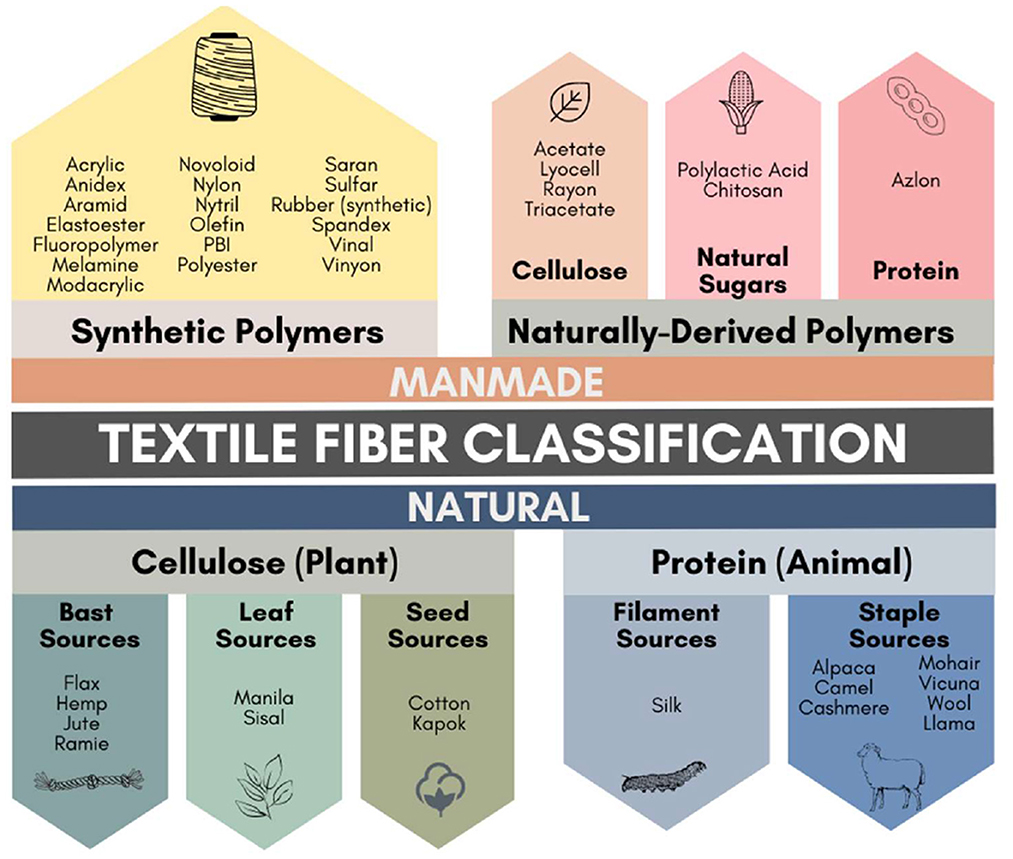
Over two-thirds of today's garment production is based on synthetic materials like polyester, nylon, or acrylic. Different synthetics have different qualities that make them more or less suitable for different uses. The purpose of this post is to explain some of the main qualities of the most popular synthetics found in clothing as well as the positive and negative sides of the material. Following the figure below, this post will focus on the pentagon of "synthetic polymers." 


Based on the information from "Physical Properties of Textile Fibers (2008)" by W. E. Morton and J. W. S. Hearle. Illustration by Schumancer & Foster (2022).


Benefits of synthetic polymers

The use of synthetic fibers in clothes was introduced to the market in the 1930s as women's hosiery. New types quickly followed; spandex hit the market; then nylon, and so on. Synthetic fabrics were instantly enjoyed as they eased up women's housework by being easy to care for and a high-performing material. It was a part of the technological revolution after the second world war that freed up more time so more women were able to enter the workforce. Today, the use of synthetic fibers has skyrocketed and we draw both pros and cons from its usage.

⇾ Easy care (wash, dry, iron)

⇾ Versatile

⇾ Durable and strong fibers

⇾ Dry fibers

⇾ Cheaper than natural fibers

⇾ Production of fibers is always available, unlike natural fibers that rely on natural cycles 


Drawbacks of synthetic polymers

⇾ Relies on petrochemicals 

⇾ Produces microplastics from the production stage to end-of-life. Synthetics are one of the world's largest causes of environmental pollution, affecting all spheres of life. 

⇾  Not compostable or biodegradable 

⇾ Low percentage of recycled materials in-use globally

⇾  Easily creates static electricity

        ⇾ Easily lint

        ⇾ Attracts dust

⇾ Does not breathe well

⇾ Bad at absorbing moisture and odor. Hydrophobic, which makes it suitable for water-repelling garments like raincoats and swimwear.

⇾ Consistent exposure to plastics is linked to negative health effects (endocrine disruption, cancer)


Different types of synthetic fibers have different qualities and require different care and uses to have the longest lifespan.


Polyester

 Can be boiled, but is well cleaned at 40-60 degrees

Easy to iron

Hang to dry in the sunshine

Frequent exposure to sunlight


Nylon

Lightweight

Waterproof

Elastic

✓ Iron carefully at the lowest temperatures with a different fabric between the nylon and iron. Nylon is not designed to be ironed. Alternatively, steam it to remove wrinkles.

Sun exposure. UV exposure will weaken the quality and fade the color. 


Acryl

✓ Light and soft fabric

Hard to wrinkle

✓ Resistant to sunlight

✓ Oftenmost used to replace wool thread but does not as warm well or felt. It is however more elastic and stronger than wool.

Wash at 30 degrees or lower

Iron at low temperatures

Absorbs moisture well

Breathable

Heat resistant. Acryl is easily flammable and will melt. 

Easy to care for

Colors bleed easily


Spandex

✓  Elastic 

Resistant to shrinkage 

Resistant to wrinkles

Colors sit well

✓  Expensive compared to other synthetics

 Wash with a mild, alkalic washing detergent in cold water

Lints easily

Absorbs sweat and odor

Breathable

Suitable for long-term use in underwear


Elastane

Elastic

Lightweight

Form-fitting

Suitable for athletic wear, swimwear, and lingerie

Prevents odor

Durable qualities. Loses elastic quality over time, leading to sagging and misshaping. 


References

"Lettstelt" (2019) and "Lettkledd" (2020) by Ingun Grimstad Klepp and Tone Skårdal Tobiasson.

Thank you, to my online friend who helped me out with information from their fashion studies! ♡

Norwegian services to ease eco habits

 A list of different apps directed at the Norwegian market and citizens to more easily make actions in line with environmental and societal values. This list is updated when needed.

“The miracle is this: The more we share the more we have.” - Leonard Nimoy 


MOT MATSVINN

Reducing Food Waste \ Redusere matsvinn

TooGoodToGo - Redd mat fra din favoritt butikk eller spisested nær deg ved slutten av dagen. Kjøp til sterkt rabbatert pris. Først til mølla prinsippet. Bestilling i appen.

ThrowNoMore - Relevant for butikkene: Spar, Joker. Alle nedprisede varer blir registrert i systemet slik at du vet hva som er på avslag i butikken nær deg.


Eating in season \ Spis i sesong

Sesongkalender for frukt og grønt


KILDESORTERING

How to recycle \ Resirkulering, Kildesortering

Sortere - Kildesortering.  Finn ut hvor det du vil kaste skal! Filtrerer etter kommune.


RENT \ UTLÅN 

Lån verktøy \ Borrow tools
    Verktøy Biblioteket - Gratis lån av verktøy hos ditt  bydelsbiblioteket i kategoriene elektriske verktøy, manuelle verktøy, verneutstyr, symaskin, etikettmaskin og lamineringsmaskin.

Biblioteket


KJØP BRUKT

Secondhand purchases \ Andrehånds butikker

Tise - Bruktbutikk på nett.

Finn - Bruktbutikk på nett.

Facebook Marketplace - Brukt markedsplass på Facebook.


KJØP LOKALT

Support local, small-scale stores

Norwegian Made - en merkeordning for norskproduserte kvalitetsprodukter, et utstillingsvindu for norske produsenter og en markedsplass for varene deres.


ANMELDELSE AV KLESBUTIKKER

Reviews of clothing brands
   Good On You - Anmeldelse av tusenvis av butikker basert på bærekrafts verdier. Etisk produksjon (mennesker og dyr), miljøvennelige produksjon (miljøpåvirkning).


Wool care & knowledge

Different types of wool have different qualities making them suited or less suited for different uses and situations. Unlike plant fibers like cotton or synthetics like acryl, wool is a protein often viewed as requiring special care. However, caring for wool doesn't have to be hard. Below, this post will take you through a handful of tips sorted as "knowledge" or "wash and care" based on the book "Lettstelt - Rene klær med lite arbeid og miljøbelastning" [Easy Care - Clean clothes with little work and environmental impact] by Ingun Grimstad Klepp and Tone Skrårdal Tobiasson. The purpose of this post is to make some basic knowledge more accessible and mobile for people (Including myself). If you're interested in more information about washing and caring for different types of fibers, check out Lettstelt at the library, friend, or local store! 

Table of content:
i. The common qualities of wools
ii. Wools for different purposes
iii. How to easily tend to wool clothes
iv. How to remove stains on wool
v. How to wash wool

KNOWLEDGE

These are the common qualities of all types of wool. These are the qualities that will make wool a purposeful choice based on what you want a garment to do for you. The main sources of wool fibers are sheep, goats (mohair), and bunnies (angora).

⇾ Stays clean for a long time
⇾ Reduces smell
⇾ Good resistance against dirt & stains
⇾ Insulating for warmth, even when it is wet
⇾ Temperature regulating
⇾ Can be soft or hard depending on the micron 
⇾ Itchy or non-itchy
⇾ Naturally fire resistance
⇾ Flexible
⇾ Tendency to lint
⇾ Can last for a long time if taken properly care of

Different types of wool suit different purposes.

Soft and fine wool fibers
For example angora, merino, alpaca, or mohair.

⇾ Shrinks more easily than stronger wool types
⇾ Often treated with Superwash (a thin layer of plastic) to prevent shrinkage during wash. Superwash is not necessary in clothing that rarely is being washed, in crossbreed wool, or mixed with silk. Total Easy Care is the most intense Superwash treatment which makes a wool item endure the dryer.
⇾ Lightweight
⇾ Fragile due to short and thin fibers
⇾ Good for soft and fine clothes close to your skin, neck, or face. For example, underwear, thin wool sweaters, or scarves. When layered, soft and fine wools are usually the inner layer close to the skin.
⇾ Angora and alpaca may be irritating to the airways. Merino naturally lint little compared to the others
⇾ When used in knits, loosely knit or heavy pieces may sag. To countermeasure this, you can do a structured knit, lay flat to dry, and store off an hanger.


Strong and thicker fibers
For example sheep wool; strong wool or cross bred.

⇾ Often more weighted
⇾ Les fitted pieces to create air for thermal insulation
⇾ When layered, thicker wools are usually the middle layer
⇾ Good for thicker pieces further away from the body like thick sweaters, outdoor clothes like mittens and hats, and sturdy enough for socks that see a lot of harsh use. Wool is not windproof, so windproof jackets or mittens can be a good outer layer.

WASH & CARE of WOOL

When washing clothes, you tend to the weakest fiber in the fiber mix. If a garment contains any percentage of wool, it should be washed according to that.

How to easily tend for wool 

 Stick to the washing label 
 Keep dry to keep clean
 Only wash with washing detergents made for wool
✓ Don't use more washing detergent than recommended
 Air out after use and "beat" it to get out dust
 Brush off the dust and crumbly spots
 Store folded in non-synthetic bags 
 Get a lint remover tool for the lint
Store in a newly cleaned and dry place, for example, wrapped in newspaper to counteract pests that like to munch on wool. If they appear, vacuum and dust all textiles throughout, wash garments at 60 degrees Celsius, or freeze at -25 degrees for at least four days depending on the pest.
 Look for detergents marked by the Swan Label or EU Ecolabel if that's in your interest

How to remove basic stains on wool

⇾ Sugar and salt-based stains and starches are soluble in water.
⇾ Fats and oils require warm water and washing detergents\soaps. Scrape off what you can (if applicable), and put directly under the water tap with the stained side down. Use stain remover if needed.
⇾ Proteins like blood or eggs require cold water. Warm water will only set the stain. Scrape off what you can (if applicable), and put directly under the water tap with the stained side down and rinse through. Use stain remover before rinsing if needed. Only get the part of the item that is stained wet to prevent the possible negative effects of stain removers and washing on fibers and color.
⇾ Pigmented stains likely need to be "bleached" gone. On wool, you can try to use lemon soap since bleach is not compatible with wool. It can irreversibly change color and "eats" the wool fibers.
⇾ Wet spills should be treated fast and try to be absorbed with a different material like toilet paper or salt to avoid an unnecessary expansive stain.
⇾ Sweat stains from wool are most effectively aired out, but also wash if it doesn't work

How to wash wool

Always use wool detergents
If you don't have it, use hair shampoo
Always use the wool-washing program on your washing machine
Don't fill up the machine with clothes. Leave some extra space
End with fast centrifugation
Stretch and pull after centrifugation to keep the size 
 Leave wool to soak in water
Dry in the sun 
 Tumble dry


Reference list
 "Lettstelt" (2019) and "Lettkledd" (2020) by Ingun Grimstad Klepp and Tone Skårdal Tobiasson.
Picture of yarn by Anastasia Zhenina on Unsplash.
Picture of sheep by Andrea Lightfoot on Unsplash.

Zero Waste stores in Norway

Norwegian stores for Zero Waste, Plastic-Free and Organic products for most of what you'd need at home.


B

BeeOrganic.no - "Nettbutikk med miljøvennelige, økologiske or rene produkter." Generelt godt utvalg av Zero Waste alternativer. Har også sitt eget varmemerke kalt "Peach" i sortimentet.


BasicallyPlasticFree.com - "NORGES FØRSTE 100% PLASTFRIE NETTBUTIKK! Opptatt av kvalitet, bærekraft, dyrs rettigheter og planeten vår."


E

Zana - Økologiske og miljøvennelige alternativer. Refill muligheter til såpe, sjampoo og balsam. Salg av matvarer i løsvekt (pasta, ris, sjokolade, korn, nøtter, osv.) 

Fysiske butikker: Trondheim. Har nylig byttet navn til Zana fra Etikken. Du kan ta med egen beholder for løsvekt!

Slo konkurs i Mars, 2023. Kjøpt opp og holder fortsatt åpent.


F

Fat og Fe - "Økologisk gårdsbruk og kolonial i Sandefjord."


G

Greenspirit.no - "Økologisk og vegansk kosmetikk på nett!" Selger noe gjenbrukbare alternativer og refills, f.eks. merket Zao.

Greenhouse.eco - Sustainably produced clothes, interior, jewelry, and zero waste items.


L

LessTrash.no - "Litt lettere å ta grønne valg." LessTrash har et noe begrenset utvalg merker innen husrengjøring, grill og mat oppbevaring (bivokspapir, handlenett). De selger også små solcelle paneler for mobil lading på tur, ol.

LushNorge.no - "Fersk Håndlaget Kosmetikk." God for emballasjefrie sjampoo, balsam og såpebarer og lignende.

Fysiske butikker: Oslo, Trondheim, Bergen, Hafsfjord, Stavanger og Sandvika.

Slo Norsk konkurs i Mars, 2023. En butikk i Norge blir værende.

Litt Grønnere.com - Helt ny zero waste butikk som redesignet gammel tekstil til bivoks og andre oppbevarings produkter som erstatter plast. 

U

Unwrapped.no - "Sørlandets første Zero Waste butikk og cafe. Tilbyr plastfrie, økologiske og lokale alternativer. Selger også produkter i løsvekt."

Fysiske butikker: Unwrapped har to fysiske utsalgssteder. En i Arendal og en i Kristiansand.


T

Tisebasics.com - Tilbyr "Grønnere hverdagsprodukter." Inkluderer en mengde zero waste gjennbruksalternativer, undertøy, hygiendeprodukter, mobildeksel, og lignende.


updated november 2024

SHEIN

Ultra Fast Fashion is the name given to brands that have taken fast fashion and decided to do it faster and cheaper. It has forced the quality of the garments down and reduced workers' pay below the legal framework in China. Today, Shein is one of the worst brands out there if you're concerned about its ethical and environmental impact.

Shein ["She-in"] was funded in 2008 under the name of "SheInside" by Chris Xu (Xu Yangtian) and two other men. It was doing drop-sale wedding dresses until it branched out into general women's wear in around 2015 and bought Romwe. Then only with Chris Xu. With early customers primarily coming from Saudi Arabia and India, interest soon hit Brazil, Mexico, and the U.S, as well as customers on the European market. From being worth $15 Billion in 2020, it grew to be valued at nearly $100 Billions by investors during the Covid-19 pandemic, and experienced a +390% revenue between 2019-2022. Most of its growth happened in 2020 as more people leaned into online shopping. Shein is now "one of the world's most valuable private companies," according to the Wall Street Journal in 2022. Observer, claims it to be the "third most valuable private company in the world," only preceded by TikTok and Elon Musk. 


What are the issues with Shein?

With such success going for it, Shein is not a company associated with the ethical treatment of workers or environmental sustainability. 

On the forefront, it lacks transparency, a quality that will allow others a view into their practices, and the ability to access if what they are doing is up to industry standards, regional laws, and their own claims about themselves. Little is known about Shein, its funder, or its practices, and it discloses no meaningful information on its page.

In 2021, Public Eye published one of the first claims about workers' experience in the Shein Supply Chain. It has thousands of small supplier factories for them in Guangzhou, China, close to where its headquarters were relocated in 2017. Workers were assigned more than a 75 hours working week with no extra overtime payment or working contract, breaching Chinese Labor laws and Shein's Supplier Code of Conduct. Additionally, they only have 1-2 free days a month. The workforce consisted of "migrant workers" (people who have moved into cities to work at a higher pay rate than in the provinces to gain money for their families) who are paid per produced item of clothing. The pay was lower than in similar factories, but also have a lower quality requirement in production. In reality, what is being offered to the worker, be it a minimum pay, a base rate, or only pay per piece varies between the factories, but don't mistake it for fair wages.

The textile industry is disproportionately affecting women, and Shein is no different. The main workforce consists of skilled seamstresses, able to keep up with the rapid change in demand, techniques, and patterns required to support the Business-to-Customer (B2C) model of Shein. More work is outsourced to other regions where the wages are even lower. The most technical parts are still being produced in Guangzhou, making the workers increasingly concerned about the reduction in the number of pieces they are able to complete, and thus their income.

The Bussiness-to-Consumer model

The Bussiness-to-Consumer model is unique in the fast fashion world, and one of the reasons Shein is able to produce successfully at the quantities it is. The change began in 2014 when Shein went from drop-sale to becoming a fully integrated retailer. It pioneered micro-batch-production, where it produced 50-100 pieces of an item and tested it on the market using algorithm-based marketing to a hyper-specific audience. Shein has 300-400 main suppliers, and works with over a thousand sub-contractors. If an item was successful, they would order more of it. This is how Shein has been able to launch an average of 2 thousand new items every day across its platform with a lower cost loss if a product isn't successful. By using marketing data in real-time, it can have a turnaround time of 5-7 days for new products, creating an increasing number of mini-trends.

The Power of Social Media 

Shein's success is not entirely due to its business model, but also its marketing model. From the start, it has used social media to spread the word about its existence, early finding its way into expensive YouTube "hauls" before TikTok took the reins of the trend and blew it up to a large number of young consumers, primarily below 30 years of age, and Gen-Z. Shein can also flaunt a larger selection of sizes, styles, and some of the lowest prices, drawing in consumers which might find themselves alienated in the traditional fast fashion market.

Consumers are lured to their website with the promise of large and numerous discounts on already cheap clothing. For example, you get a voucher if you download their app, free shipping if you spend x amount of money on your order, or free returns within 60 days if you simply sign up for their mailing list, letting them market more of their products to you. Other vouchers can be found if you use their "daily check-in" feature on the app, or leave a review on a product. Shein WANTS YOU to stay in touch and spread the word, and it is making sure you do not miss it and that you keep spending your money in quantities on the brand. This is some of what has gotten Shein ranked as the "most manipulative fast-fashion site" applying eight dark patterns to influence the consumer to make purchases and make them share their data (for discounts).

This model of customer engagement works exceptionally well for eCommerce as it keeps the consumer coming back. However, it is a black hole if you look at how it is affecting consumer behavior towards overconsumption. Especially, young consumers are easily influenced and want to stay on-trend. To be able to do that at the speed it is moving online, affordable clothes are a must for most people. 

Shein is also known for using influencers to sell its product. Influencers help create a parasocial relationship between the person and the consumer (yourself) which often leads to the consumer trusting the word of the influencer without attaching critical thinking. The young demographic associated with Shein consumers is easily exploited in that way.

You can read more about their Digital Marketing Strategy here.


QUANTITY OVER QUALITY

Quantity over quality is one of the principles running Shein, but it is also causing severe environmental damage. First, they primarily use petroleum-based textiles, meaning synthetics aka plastics like polyester and nylon. Plastic shed microplastic throughout its entire lifespan. Still, it is a fabric favored for its cheap cost and predictability compared to natural fabrics. Synthetics are also known for being durable, however, in a production model where clothes are made in such low quality they barely have any resell value, durability is not a favorable quality.

That is also why an increasing number of Shein items make their way to the secondhand market. Secondhand buyers are expressing increasing despair over the lack of quality in secondhand stores. More is becoming fast fashion, and an increasing amount is from Shein. The secondhand market is in direct correlation with the firsthand market, meaning that what is being bought and discarded (donated) firsthand is what is making it into the secondhand market. With a high consumption rate and low-quality articles that don't always stay true to their description, items easily move on when a consumer isn't satisfied with their buy or finds it wearable for nothing more than a short period of time.

What isn't being redistributed secondhand across the globe with various ethical and environmental concerns, is likely to end up in a landfill in the global south or burned.

The impacts of water pollution, air pollution, and GHG emissions are also to be assumed by this brand similar to Fast Fashion.

Other concerns

 ✤ Finds of lead and heavy metals in children's and adult's clothes and accessories (2021)

 ✤ Theft of small-business designs (2021)

 ✤ Appropriating religious symbols as fashion (2022)


UNTOLD: Inside the Shein Machine 

Tomorrow, on Monday, October 17th, a new documentary is being released on All4 taking us inside Shein for the first time. This article was (finally) written in anticipation of the release, knowing it will add more light to the opaque supply chain of Shein. You can click here to read the Twitter thread and get updated on some of the main finds. I will do a review\summary of the documentary when the time comes.


Digital books or printed books: what is better?

The discussion about which book format(s) is the better has been going on for some time. There are pro and cons to all of them, and what we land on as readers is often about personal preferences and what we seek, have access to, and are willing to compromise on when it comes to our reading experiences and values. A factor that is often left out when discussing the "best book format" is the environmental impact of these different types of formats. In this article, I will attempt to run down the good and the bad of the three main formats of books - audio, electronic, and printed copies to better answer this question from an environmental point of view. It will start with the pros and cons for everyday readers, before diving into e-readers v. printed books and how they measure up in the sustainability debate. A distinction between paperbacks and hardcovers will not be accounted for.

PROS AND CONS OF THE DIFFERENT FORMATS FOR THE EVERYDAY READER

There are a handful of main features to look at when distinguishing between the different formats in terms of qualities favored by a reader. Among those are price (cost of a book, membership) and accessibility (weight, charging, reading ability), and aesthetics like book designs and smell.

Audiobooks: Audiobooks are likely one of the easiest ways to read while doing something else, e.g. traveling or chores. At a minimum, it requires access to a book through an app on your phone or other smart devices. It drags you into the story through the voice(s) of the narrator(s), enhancing the natural flow of the text, distinguishing between characters, and setting the atmosphere through sound alone. Some people have no issues with listening to a book, while others struggle with retaining information and engaging with the book when they only rely on hearing. 

Audiobooks are often pricy without a membership, the cost being steeper than both e-books and printed copies. Membership requires an app and a monthly cost which continue to grant you access to their digital library. There are different "deals" on different apps, Audible by Amazon being used by many. Audible offers readers free credits every month to spend on a book of their choice. The credits may often reduce the cost of an audiobook compared to if you were to buy it at its original price. You also won't lose an already downloaded book if your membership is ended or paused. If you want to take uttermost use of Audible, one should take note of the option to return books for credits. This feature is however not without consequences for the author of which book you return. As a reader myself, I would suggest not returning books by small authors, your favorite authors, and books you finished to grab another one for "free." It can have severe impacts on the financial stability of the author. Audible is not a library, but a store. A general recommendation, use local audio platforms instead of Amazon.

There are other ways to access audiobooks as well. Digi books or CDs can be accessed at a library or purchased at a store. The weight of a DigiBook device is not much more than a phone, but requires another electrical device compared to relying on what you already have. Access to books will vary depending on where you are in the world. Likewise, CD's might be good for a car ride or a home reading practice, but won't do it on a bus ride or in public like a phone unless you really want to rock a Diskman.

E-books: Ebooks are also digital downloaded copies mainly available through your phone, e-reader, or laptop. They are lightweight to travel with and let you bring a plethora of books to read on one small device. Whether you require a monthly membership to keep your access to e-books depends on the app you're using. Often most, e-books are easier to buy and are a one-time purchase stored in a cloud linked to your account and\or device. E-books are definitively cheaper than both audiobooks and printed copies.

Many purchase e-readers to go with their e-books. E-readers can reduce the strain on your eyes, let you keep a larger library, have fewer distractions, and save your charge on other devices while reading. However, it is an electrical device whose environmental impact will be discussed later in this article.

Printed books: What foremost distinguishes a printed book from digital editions is the reader's ability to interact with it - touch and smell being the primary pros for this argument. Printed books come in an array of different sizes and editions and do for many act as collectibles. Printed copies are looked at as the most aesthetically pleasing, having, among them, dustjackets, embossed covers, sprayed edges, zigzagged edges, and incorporated bookmarks going for them design-wise. They are by far the most extravagant edition where you can get everything from a minimally designed paperback to a limited-print, embossed and leatherbound hardcover edition. The option to choose the design of your edition is not often carried over to digital copies, which often rely on your geolocation to offer you your "local" cover (Europe or internationally often meaning the UK cover as much is based in the U.S.)

Printed copies are heavier than digital editions, and overall land as a medium-priced type of book format. Printed books are available wherever you go as long as you have the space and carrying capacity to take them with you. Paperbacks clearly take the front seat as the better traveling companion. Unlike digital editions, printed books has definitively another sphere of sharing to it that renting from digital libraries does not. When you first have a book, you won't lose it because your subscription runs out or being declined from sharing it or your account with others. It is something you pay a one-off sum for and which the seller can not take away from you if the work is removed from the platform or smilar.

Where digital editions don't directly require any ink or wood, they are the two main components of a printed book. Like e-readers, also these leave an environmental impact which will be touched upon below.


THE ENVIRONMENTAL IMPACT OF PRINTED EDITIONS v. E-READERS

Digital copies have over the last decades become a part of "Green Publishing" initiatives. Green Publishing are ways the publishing industry is working towards lowering its impact on climate change. Printed editions relies on wood which can be linked to deforestation of endangered forests, and ink which can become an environmental pollutant. Producing a single printed book produces about 7.5kg of CO2 and consumes about 2 kWh. Additionally, it uses less than half a kilo of minerals and 7.5liters of water. Solutions for the industry to the wood and ink usage are using more recycled paper, FSC-certified wood, and reducing the amount of chlorine in the bleaching process of paper. Petroleum-based ink can be traded for vegetable-based ink. Yet, readers want to distance themselves from the negative impact printed books have on the environment. Here, e-readers and digital copies have become a popular alternative.

Despite good intentions, e-readers are not necessarily better for the environment. Upfront, it uses ~30kg CO2 and 100 kWh. It also uses ~15kg of minerals, some linked to war conflicts. This means that you need to use your e-reader a lot to leave a smaller impact than if you read on a multipurpose device like your phone or bought a handful of printed books a year. Mainly, studies have found that you need to substitute 22-50 printed copies to make up for the production of an e-reader, and thus make e-readers an overall better option for the environment than physical copies.

THE IMPACT OF AUDIOBOOKS

Audiobooks require no production of a new physical object to be listened to. It also needs no additional shipping to reach the consumer. Its impact will primarily be downloaded or streamed audio files. Here, downloaded files are considered better than streamed ones if you aim to revisit the material. However, overall, it does not leave a much larger impact than streaming or downloading movies and shows. This is, of course, as long as you read on a multipurpose device you already own such as your phone, laptop, or tablet. 


WHAT IS BETTER?

Due to their small digital form, audiobooks are the best choice for the environment as long as you already have a device to read on. Otherwise, what is the better choice of format depends on your overall usage. For printed edition, its impact on global forests is the biggest concern, while e-readers take a heavy toll with mining and CO2 emissions per unit. 

If you read a few books a year, printed copies are better than investing in an e-reader. If you read more than 22-50 books within the lifespan of your e-reader, reading all of those as e-books is better than buying the same books printed. The instances where you can download content and read on devices you already own are always better than ones where you have to buy something firsthand. If that means a printed book or an e-reader. 

However, as a reader, you also got to make considerations for yourself and what you want out of the tool you choose to read on and if it works for you. There are pros and cons with all formats and whether they are "environmentally friendly" may not be the make or break factor.


READ & SHARE

While discussing the impacts through firsthand purchases, it is important to mention the positive impact secondhand purchases and sharing have on the environment. The longer a book or device travels from hand to hand, the better it is for the environment as fewer resources are being claimed. Buying books and e-readers secondhand, going to the library, swapping, or borrowing from a friend is ultimately the best option.

Low Impact Laundry

The "in-use" stage of a garment's lifespan represents one-fourth of the total impact of our clothing. How long we keep our clothes and actively wear them can reduce the impact they have on the environment. It's estimated that a garment in the United Kingdom lasts about 2.2 years before being discarded. The 2012 Wrap rapport showed that if we extend the time we use our clothing by 33% (9 months, based on the average use being 2.2 years) it is possible to reduce the total carbon footprint of our clothing by 27%. How often we wash and tumble dry, the fiber content, temperature, and detergents used are important values making out the total impact. To make this into practical solutions, I collected a handful of ways to do laundry that prioritizes its lastingness and impact on the environment.
HOW TO CLEAN MORE GENTLY
Spot clean & air-freshen. Often, clothes don't need to go straight into the washing machine. Instead, it can be enough to spot clean or air-freshen a garment so you can use them more before you wash them. Most people wash their clothes too often, or unnecessarily, something that reduces the lifespan of the garment, removes dye faster, and lowers the fiber quality.

Hang to dry. Tumble drying is energy-intensive and can be substituted for air-drying clothes on a rack. Washing and drying our clothing makes up about 10% of the total CO₂ emission of cars in the UK. Air-drying can be done outside all year round, or inside. For people not used to this practice, drying time is normally between 1-3 days indoors, possibly more during the winter months and shorter during summer. Some textiles benefit from being air-dried or laid out flat to dry. It helps preserve their shape and can reduce wrinkles. Hanging to dry saves both money and electricity.

Change your washing detergent to a non-toxic, "eco-friendly" alternative. Washing detergents can directly affect marine life as many include harmful or toxic components that accumulate in the water bodies or living organisms. These components can have a negative effect on our bodies and health when they absorb into our skin through the wear of our garments. Phosphorus is one ingredient to look out for that is known to cause water pollution and is linked to heart disease. In water, Phosphorus can create algae bloom and suffocate small water bodies or rivers. You also want to avoid 1,4-Dioxane and phthalates.They are known to be endocrine disruptive and human carcinogenic. They can cause serious illness with long-term air exposure or consumption.

Some will avoid a variety of other chemicals (the list of options are long) for different reasons. Some are oil derivatives, fragrances, or other chemicals linked to disrupting or harming organisms. A handful of examples of these are ammonia, nonylphenol ethoxylate, phenols, and Sodium Laurel Sulfates (SLS). Avoiding all of them is a rather large task, and settling for a trade-off is oftenmost the reality.

Some natural alternatives to conventional detergents are: Bio-D laundry powder, laundry washing strips or sheets (e.g.TruEarth or kind lauder), CleanCult, and the EcoEgg. Some people use soapnuts or DIY\old recipes. The positive about eco-friendly detergents is that they are gentler with your garment by using less harsh ingredients. That may however fire back if you have deep stains or smells set into the garment long before wash. That's a consideration you have to make for yourself and your lifestyle.

Wash at lower temperatures. Heating the water in the washing machine uses up to 90% of all the energy in a washing cycle. Lowering the temperatures on most washes to 30-40 degrees helps reduce energy usage and CO emissions. Some items you may want to wash at higher temperatures (bedsheets, underwear, and towels). Activewear is also an option, however, one should be aware that the higher the temperature used on synthetic fibers, the more microplastic it sheds in the wash. It is understandable that 30-40 degrees may be too low for some, and we got to do what works for our lifestyle and equipment. However, before the idea gets disregarded, try it out with certain types of clothes and maybe you find a way to wash some of your clothes at a lower temperature.
Read the label. Read the label so you know what temperature and sort of wash each garment are suited for. There's no problem mixing clothes at lower temperatures than what the label says, just be aware to not go higher than the lowest one in the batch. Preferably, wash similar colors together, at least separate out white to keep the white looking white, and to not wash brand clothes with light-colored clothes when they are a darker color. They are likely going to color the lighter pieces.

If you're unsure of what some labels mean, Love Your Clothes have a guide to understanding care labels.

Use a guppy bag or filter to reduce the microplastics from a wash. Everything from a few thousand to several million microfibers may be released in one wash. If you use a washing bag or install a microfiber filter you can reduce the impact of your synthetic clothing by keeping what you reasonably can out of the wastewater and the sea. If you concurrently limit your purchase of new synthetic clothing you're taking it a step further. However, don't look blindly at this statement. Just because textile is made of natural fibers, it's not necessarily better for the planet. Conventional cotton, for example, has a massive environmental impact that should not be overlooked. As well does denim and leather.

FURTHER RESOURCES
  • Love Your Clothes is a British campaign aiming to help reduce the impact our clothing has on the environment. It is full of advice on how better to take care of our clothing through wash, repair and reuse.
  • The website, Scandinavian Standard, has an article titled "The Ultimate Guide to Sustainably Caring For Your Clothes(2019)." It's a good place to start to explore more alternatives to promote the longevity of your garments.

An introduction to food waste

Dictionary: 

⚘ Food waste refers to when food is discarded by consumers, food services, or retail. 

⚘ Food loss happens when food is discarded throughout the supply chain, e.g. harvest up until retail, and is not repurposed into animal feed, seeds, and so on.

⚘ The best-by date is given to products that are easily perishable and often are unsafe to eat after that date.

⚘ Best before date is given to products that aren't necessarily bad by the best before date. They often are edible long after. Use the look, smell, and taste test to judge.  

THE ISSUE WITH FOOD WASTE

Annually, one-third (1.3 million tons) of all food produced is wasted or lost, ranging from 14% to 20.7% depending on the region of the world. The majority is lost in Southern and Central Asia, Europe, and North America. Food loss and food waste are big contributors to climate change (8% of all greenhouse gases annually) and to global food security (The Oxford English Dictionary defines food security as "the state of having reliable access to a sufficient quantity of affordable, nutritious food.")

In 2020, around 800 million people suffered from undernourishing, making up ~9% of the global population. It is theorized that the amount of food waste created is enough to feed every human on Earth. We are, in other words, not producing too little to support our current population, but we have crucial issues with fair distribution, waste, and loss in the supply chain.


Food wasted at consumer levels normally goes to the landfill. In landfills, organic matter cannot decompose. Instead, it breaks down into several by-products, among them, Methane, a greenhouse gas at least 25 times more potent than CO in heating the atmosphere during the nearest 20 years, CO₂, and HO. The importance of reducing our food waste thus becomes clear. By limiting how much food we discard, we can in theory support a fairer flow of food, reduce the amount of greenhouse gas released into our atmosphere, and save money.

Not all foods are produced equal. Some come with larger greenhouse gas emissions and have a higher impact if wasted or lost. On the top of the list, are beef and lamb with pork, dairy, egg, and chicken ranging further down, though not below plant-based options. Regardless, of what you choose to eat, it is important to work towards a more respectful attitude towards the food we purchase. Food waste is not only the waste of the food itself, but the waste of all resources gone into making that food accessible to you.


HOW TO LIMIT FOOD WASTE AT THE HOUSEHOLD LEVEL

Based on that food waste from households is a large contributor to total food waste within the EU, applying habits to your daily life that may improve this can be helpful. Wether you think about how it can impact the total food waste statistics or simply want to make your food last longer and get more out of your money. Not all of these will be accesesible, but focusing on the basics, e.g. how you buy and store your food should get you a long way.

Before or when you buy

⚘ Plan meals and purchases to limit how much is bought but not eaten in time.
⚘ Only buy what you plan to eat. 
⚘ Buy foods that are in season where you live.

Storage and consumption
⚘ Learn to properly store food so it lasts longer.
⚘ Use the freezer more often to keep fine, soon-to-be expired food edible longer.
⚘ Eat up all meat and dairy since they have the biggest greenhouse gas emissions. Or opt for a diet with less or no animal-derived products.
⚘ Eat leftovers.
⚘ Give away food or invite friends over if you have a lot of food you know you won't eat up on your own before it perishes. 
⚘ Look, smell and taste before you discard something. The best before date does not mean it is expired. Many products keep long after their best before date.

Reuse before you waste

⚘ Learn easy recipes on how to reuse types of food that you would normally trash (e.g., stale bread can be turned into croutons, some greens can get rehydrated in cold water.)
⚘ Look up options to reuse your food scraps (vegetable peels can be cooked into a vegetable broth for soups and casseroles, used as plant dye for eggshells or textiles. Fruit peels can fertilize your houseplants. Coffee grounds can become a body scrub or plant fertilizer.)
Compost and foraging
⚘ Learn to home compost or take advantage of local compost sites or programs to avoid sending it to landfills if your region doesn't already have a program for it.
⚘ Learn to respectfully forage something you eat in your local area - berries, fruits, herbs - or try to grow one of your own at home.

HOW TO APPLY THE LOOK, SMELL AND TASTE TEST

Look, smell, and taste (in that order) is an active way consumers can become more aware and judge if the food they have at hand is edible or not. The use-by date is easy to understand; it is put on easily perishable food, most often meat and dairy, to warn you that it shouldn't be used after that date (if not frozen before the date). The best before date is more difficult as food isn't necessarily bad just because it passed its best before. 
Look - Look at the product. Has it changed color, texture, or has any moldy parts?
Smell - Smell the product. Has the smell changed? Is it fresh, sour or has a different smell than it would if it was fresh? Sour milk or cream can be used in waffles.
Taste - If both look and smell are good, the last test is to taste a small part of it. Has the consistency or flavor changed?
If all three tests check off as fine it should be safe to consume.