notebook for the ages ♒︎

Showing posts with label book review. Show all posts

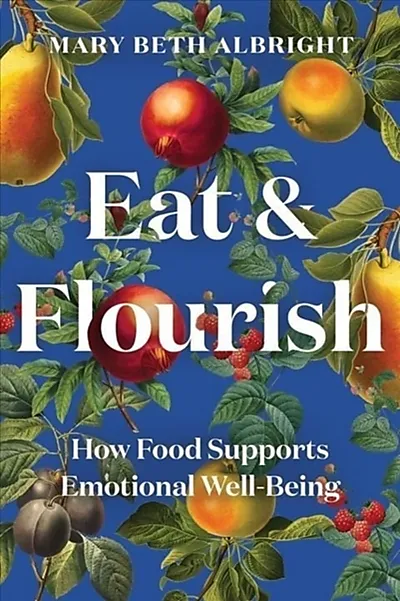
Eat & Flourish: How Food Supports Emotional Well-Being (2022) by Mary Beth Albright

I don't tend to write a lot of reviews of non-fiction books because how should I even do that when I cannot even start to question what is being said. I can comment on how it is being shared and the focus of the book, but that's not very interesting when I choose to pick up the books for the information I hope they can offer me. I picked up this book in hope of finding some ways to improve my gut health and emotional wellbeing, and that is what I got. I loved learning more about how the human body works and which foods supports which processes and moods in the body based on scientific studies. Overall, I will bring with me this knowledge into the future in the hopes of creating better eating patterns for myself. This book advocates for a mediterrian style diet with focus on whole foods, fermented foods and a higher intake of fiber. As well as, cooking and eating with somone instead of alone. Community is a way of strenghtening our emotional wellbeing, and cooking let us use all our senses. Maybe there's some truth to the saying "food is medicine" when it contains benefitical ingredients, pleasure and community.

Here are some of the highlights and main takeaways I got from the book. I share these in hope that they may help you too!


What can food do?

* Moderate our responses to stress, anger, anxiety, sadness, and so on. 

* Reduce and induce inflammation in the body and brain

* Long-term eating patterns can set us up for long-term well-being


A Healthy relationship with food

* Includes pleasure, and how and what we eat.

* Is sustainable long-term.

* Is not just about how many calories and nutrients a person eats in a day.

* Includes a regular eating pattern.

* Knows that everyone are different, and that if several people eat and exercised the exact same every day, they would still not look the same.

* It's a journey.


Food  Emotions

* Emotions impacts what and how we eat, and what and how we eat impacts our emotions. When we feel down or distressed we are more likely to make food choices that are bad for our mood, and further enhance the circle. However, the idea of neuroplasticity includes that our eating habits\patterns can change and start working more in our favore if we change to foods that better support us and our moods. Which comes first (food or emotions) is hard to say, but they impact each other both ways. 

* Mood impacts how we experience food and factors like the intensity of taste and flavor, and more. The same goes for the color of the food, how it is served and the texture of the food. Food may taste sweeter if you're happy, while they may taste more bitter if your favorite sports team just lost their game. Depression may cause a preferance for sugar and enhance sweet and bitter flavors. Anxiety is directly related to our perception of taste (based on altered serotonin and noradrenaline levels in our body).

* How the food is presented impacts our experience of sweetness. Coffee tastes better in a white cup than a blue. Desserts taste sweeter on a round plate than a square plate, on a white plate than a black plate. We expect food and drinks with stronger colors to taste more intensely.

* How we eat matters. Eating with people and using mealtime as a mean of strenghtening community helps. Verbalizing how we feels makes the emotions less intense, as well as strenghten our sense of belonging. Eating alone and being lonely negatively affects our health. The risk for heart disease increases.

* Planning, buying groceries and cooking for ourselves and other people are all healthy habits. They may create good feelings as we associate each action with people we like, taking care of loved ones, being selective about which produce we get, making us feel like we're picking especially good ingredients.

* Your body may need more of certain nutrients when it is experiencing certain emotional states. For example, if you're often stressed you may eat more magnesium-rich foods, or if you're sad, zinc.

* Hanger is your body telling you you're hungry, but also activating this as a negative feeling. Chronic stress can change the hangry neurons and result in inflammation. When you're hungry, eat properly. The agRP activity in your gut will not be properly reduced or turned off until next time if you only drink a diet coke to 'curbe your hunger.'

* Trauma can change your gut microbiome. Yet, there is not one "perfect" gut microbiome nor a perfect way to eat. We are all unique and need to make changes after our needs. Our gut microbiome changes every single day around what we eat, medication, exercise, age, if we have pets, if you gardened, who you're around, your sex, emotions and genes. As well will the microbiome of someone with anxiety look different from someone without it.

* Often we may anticipate a food more than the pleasure we get when we eat it. This may be especially true for fat and sugar-rich foods, f.ex. sweets, ultraprocessed foods, and fast foods which our brains crave as easy energy. However, the same foods may increase inflammation in our body and starve the bacterias in our gut for nutrients to keep us healthy. The more frequent we eat these foods, the more we will take notice of access to these foods around us, yet recieving less pleasure from actually eating them.


Food, mood, and inflammation - the gut

* Having meaning in your life lowers your genetic expression of inflammation and cortisol. 
* Having a "higher purpose" in life makes your cortisol levels reduce faster after activation.
* Purpose makes you less reactive to negative stimuli.

* Gut bacteria is responsible for making short-chained fatty acids which protect against inflammation
* 50% of our dopamine is created in the gut.
* 90-95% of serotonin is created in the gut. 

* Oxidative stress may be caused by excessive sugar intake and many spikes in your blood sugar across the day. 


Helpful nutritional and food facts from the book

* A person needs 14grams per 1,000 kcals to properly feed the fiber-loving bacteria in our stomach. If the bacteria does not get the fiber it needs, it may begin eating on our stomach lining, which can cause issues over time. The book recommends that women get 25grams and men 38 grams a day.

* 5 fruits and vegetables a day (2 fruits, 3 vegetables?).

* Eat probiotics and prebiotics every day. Prebiotics feeds the good bacteria in our gut, probiotics can reduce inflammation. 

    * Eating foods\drinks with active strains of Bifidobacterium longum reduces stress in participants while doing traditionally stressfull tasks. Fx. yoghurt, fermented foods (not pickled, fermented without vinegar. You want the lactic acid bacteria alive), kombucha, fermented cottage cheese, kefir, miso paste.

    * Prebiotics are high in onion and garlic, oats, apples, banana, black beans, kidney beans, avocado, broccoli.

* Omega-3-Fatty Acids (esp. DHA, EPA) is one of the best researched nutrient in support of mental health. It promotes sleep, decreases anxiety, allivates depression and is an "essential fat" in our diet. It can be retrived from fatty fish, seaweed and algae, or be added to other products like milk. Omega-3 ALA can be found in walnuts, flaxseeds and leafy greens, and can be transformed in the body to DHA\EPA. However, ineffectively. Most people do not eat enough omega-3.

* Omega-6 is to find in soybeans and corn, thus making it a nutrient we tend to have too much off due to them being common in ultraprocessed foods.

* Eating fermented foods and a higher intake of magnesium regularly may reduce social anxiety.

* Serotonin in the gut is created by getting enough of the amino acid, tryptophan (oats, nuts, cheese, turkey), and vitamin B6. However, tryptophan may also lead to inflammation if we do not have enough of the good gut bacteria and our body cannot process it well.

* If you're nervous\afraid a lot and adrenaline is pumped into your blood, you usually have a higher need for vitamin C. Humans cannot make vitamin C on its own. Food suggestions: citrus fruits, yellow peppers, kale, broccoli, brussel sprouts, strawberries.

* If you're angry\mad a lot it may cause stress, brain fog and memory issues. Suggested foods: tuna, salmon, anchoves, pumpkin seeds, beans, lentils. Foods with calm scents like rosemary and lavendel.

* Foods that support sadness are: dark chocolate (with cocoa butter), hot peppers, eggs, turmeric.

* Foods for when you're happy: oysters, leafy greens, nuts.

* Anti-inflammatory foods: beans, legumes, tomatos, nuts, olive oil, leafy greens, fatty fish, turmeric, oregano. Black tea, green tea, whole grains, cinnamon,

* Music can impact our eating speed. Fast music speeds it up, slow music speeds it down.

* Having a food ritual - saying thanks, eating with people - may make us take better food choices within a week.

* Exercise frequently to reduce chance of inflammation in your body. All types of exercise counts!


Strategies to eat more diversly

* 30 plants a week -> Eat all types of plants. Includes fruits, vegetables, grains, herbs, spices, berries, nuts and seeds.

* Eat the rainbow -> different color of the fruit may benefit different parts of your body

* The NOVA scale -> how to avoid the worst of ultra processed foods

* PING -> pleasure, inflammation, nutrients, gut microbiome.


How foods have changed over the last century

* The nutrient value in 43 crops have decreased since 1950 due to reduced soil quality and biodiversity in farming fields. Higher nutrient levels in foods affects the taste, aroma and mouthfeel of foods. Less nutrisious foods may thus be less pleasureable to eat.


FOUR BOOKS ABOUT HUMAN CONNECTEDNESS TO NATURE

A list of four books and poetry focusing on human connectedness to nature.

The Overview: Meditation on Nature for a World in Transitions by Willow Defebaugh

Publisher: Atmos, Year: 2024

Information of note: This book offers four different covers. The book is printed on 100% recycled paper, and is a linen-bound hardcover.


Atmos summary: Metamorphosis begins within. In order to mend our relationship with this planet, we need more than sustainability: we need a change of spirit. From the reciprocity of trees to the long view of volcanoes to the patience of spiders, The Overview illuminates the wisdom of the Earth and its many teachers. An anthology of meditative essays from Atmos Editor-in-Chief Willow Defebaugh alongside immersive photography of ecosystems around the world, it’s a pathway for reconnecting with nature through reverence, balance, evolution, and healing.

With photography by Chloé Milos Azzopardi, Jacques Brun, Christian Cassiel, Laurence Ellis, Théo de Gueltzl, Collin Hughes, Annie Lai, Gleeson Paulino, Ben Toms, Vivek Vadoliya, Alba Yruela, and more.


Garden Physics by Sylvia Legris

Publisher: Granta (Poetry), Year: 2022

Garden Physic is a radical poetic movement through plant life. With her singular line, she journeys readers through an investigation of how we articulate our ecological surrounds in language through botanical histories. 

With a structure that emulates the style of classic manuscripts, Legris’s book deploys humour, deep intellect, and a fanatical obsession with the potential of language, punching through the cliches of contemporary nature writing. 

The whole book is a glorious meditation on the garden and the power of plants: how they can heal us, emotionally and physically, and how we communicate with them.


Becoming Animal: An Earthly Cosmology by David Abram

Publisher: Random House, Year: 2010

David Abram’s first book, The Spell of the Sensuous—hailed as “revolutionary” by the Los Angeles Times, as “daring and truly original” by Science—has become a classic of environmental literature. Now Abram returns with a startling exploration of our human entanglement with the rest of nature.

As the climate veers toward catastrophe, the innumerable losses cascading through the biosphere make vividly evident the need for a metamorphosis in our relation to the living land. For too long we’ve inured ourselves to the wild intelligence of our muscled flesh, taking our primary truths from technologies that hold the living world at a distance. This book subverts that distance, drawing readers ever deeper into their animal senses in order to explore, from within, the elemental kinship between the body and the breathing Earth.

The shapeshifting of ravens, the erotic nature of gravity, the eloquence of thunder, the pleasures of being edible: all have their place in Abram’s investigation. He shows that from the awakened perspective of the human animal, awareness (or mind) is not an exclusive possession of our species but a lucid quality of the biosphere itself—a quality in which we, along with the oaks and the spiders, steadily participate.

With the audacity of its vision and the luminosity of its prose, Becoming Animal sets a new benchmark for the human appraisal of our place in the whole.


Right Story, Wrong Story: Adventures in Indigenous Thinking by Tyson Yunkaporta

Publisher: Text Publishing , Year: 2023


Right Story, Wrong Story extends Yunkaporta’s explorations of how we can learn from Indigenous thinking. Along the way, he talks to a range of people including liberal economists, memorisation experts, Frisian ecologists, and Elders who are wood carvers, mathematicians and storytellers.

Right Story, Wrong Story describes how our relationship with land is inseparable from how we relate to each other. This book is a sequence of thought experiments, which are, as Yunkaporta writes, ‘crowd-sourced narratives where everybody’s contribution to the story, no matter how contradictory, is honoured and included…the closest thing I can find in the world to the Aboriginal collective process of what we call “yarning”.’

And, as he argues, story is at the heart of everything. But what is right or wrong story? This exhilarating book is an attempt to answer that question. Right Story, Wrong Story is a formidably original essay about how we teach and learn, and how we can talk to each other to shape forms of collective thinking that are aligned with land and creation.


Thank you for reading!

If you enjoyed this post, you may also enjoy my last year's post about Animism & landconnectedness.

Wool care & knowledge

Different types of wool have different qualities making them suited or less suited for different uses and situations. Unlike plant fibers like cotton or synthetics like acryl, wool is a protein often viewed as requiring special care. However, caring for wool doesn't have to be hard. Below, this post will take you through a handful of tips sorted as "knowledge" or "wash and care" based on the book "Lettstelt - Rene klær med lite arbeid og miljøbelastning" [Easy Care - Clean clothes with little work and environmental impact] by Ingun Grimstad Klepp and Tone Skrårdal Tobiasson. The purpose of this post is to make some basic knowledge more accessible and mobile for people (Including myself). If you're interested in more information about washing and caring for different types of fibers, check out Lettstelt at the library, friend, or local store! 

Table of content:
i. The common qualities of wools
ii. Wools for different purposes
iii. How to easily tend to wool clothes
iv. How to remove stains on wool
v. How to wash wool

KNOWLEDGE

These are the common qualities of all types of wool. These are the qualities that will make wool a purposeful choice based on what you want a garment to do for you. The main sources of wool fibers are sheep, goats (mohair), and bunnies (angora).

⇾ Stays clean for a long time
⇾ Reduces smell
⇾ Good resistance against dirt & stains
⇾ Insulating for warmth, even when it is wet
⇾ Temperature regulating
⇾ Can be soft or hard depending on the micron 
⇾ Itchy or non-itchy
⇾ Naturally fire resistance
⇾ Flexible
⇾ Tendency to lint
⇾ Can last for a long time if taken properly care of

Different types of wool suit different purposes.

Soft and fine wool fibers
For example angora, merino, alpaca, or mohair.

⇾ Shrinks more easily than stronger wool types
⇾ Often treated with Superwash (a thin layer of plastic) to prevent shrinkage during wash. Superwash is not necessary in clothing that rarely is being washed, in crossbreed wool, or mixed with silk. Total Easy Care is the most intense Superwash treatment which makes a wool item endure the dryer.
⇾ Lightweight
⇾ Fragile due to short and thin fibers
⇾ Good for soft and fine clothes close to your skin, neck, or face. For example, underwear, thin wool sweaters, or scarves. When layered, soft and fine wools are usually the inner layer close to the skin.
⇾ Angora and alpaca may be irritating to the airways. Merino naturally lint little compared to the others
⇾ When used in knits, loosely knit or heavy pieces may sag. To countermeasure this, you can do a structured knit, lay flat to dry, and store off an hanger.


Strong and thicker fibers
For example sheep wool; strong wool or cross bred.

⇾ Often more weighted
⇾ Les fitted pieces to create air for thermal insulation
⇾ When layered, thicker wools are usually the middle layer
⇾ Good for thicker pieces further away from the body like thick sweaters, outdoor clothes like mittens and hats, and sturdy enough for socks that see a lot of harsh use. Wool is not windproof, so windproof jackets or mittens can be a good outer layer.

WASH & CARE of WOOL

When washing clothes, you tend to the weakest fiber in the fiber mix. If a garment contains any percentage of wool, it should be washed according to that.

How to easily tend for wool 

 Stick to the washing label 
 Keep dry to keep clean
 Only wash with washing detergents made for wool
✓ Don't use more washing detergent than recommended
 Air out after use and "beat" it to get out dust
 Brush off the dust and crumbly spots
 Store folded in non-synthetic bags 
 Get a lint remover tool for the lint
Store in a newly cleaned and dry place, for example, wrapped in newspaper to counteract pests that like to munch on wool. If they appear, vacuum and dust all textiles throughout, wash garments at 60 degrees Celsius, or freeze at -25 degrees for at least four days depending on the pest.
 Look for detergents marked by the Swan Label or EU Ecolabel if that's in your interest

How to remove basic stains on wool

⇾ Sugar and salt-based stains and starches are soluble in water.
⇾ Fats and oils require warm water and washing detergents\soaps. Scrape off what you can (if applicable), and put directly under the water tap with the stained side down. Use stain remover if needed.
⇾ Proteins like blood or eggs require cold water. Warm water will only set the stain. Scrape off what you can (if applicable), and put directly under the water tap with the stained side down and rinse through. Use stain remover before rinsing if needed. Only get the part of the item that is stained wet to prevent the possible negative effects of stain removers and washing on fibers and color.
⇾ Pigmented stains likely need to be "bleached" gone. On wool, you can try to use lemon soap since bleach is not compatible with wool. It can irreversibly change color and "eats" the wool fibers.
⇾ Wet spills should be treated fast and try to be absorbed with a different material like toilet paper or salt to avoid an unnecessary expansive stain.
⇾ Sweat stains from wool are most effectively aired out, but also wash if it doesn't work

How to wash wool

Always use wool detergents
If you don't have it, use hair shampoo
Always use the wool-washing program on your washing machine
Don't fill up the machine with clothes. Leave some extra space
End with fast centrifugation
Stretch and pull after centrifugation to keep the size 
 Leave wool to soak in water
Dry in the sun 
 Tumble dry


Reference list
 "Lettstelt" (2019) and "Lettkledd" (2020) by Ingun Grimstad Klepp and Tone Skårdal Tobiasson.
Picture of yarn by Anastasia Zhenina on Unsplash.
Picture of sheep by Andrea Lightfoot on Unsplash.

THE DARKEST PART OF THE FOREST BY HOLLY BLACK | BOOK REVIEW

The Darkest Part of the Forest (2015) by Holly Black is a teen novel about growing into your childhood dreams. The book follows the siblings, Hazel and Benjamin who lives in a small town adapted to the frequent visits by the dangerous and trickery Fae Folk. In the forest, a fay prince rests in an unbreakable glass casket. Both Hazel and Ben dream about waking him up and falling in love, just as in the fairy tales. When the fairy attacks on the town intensifies and the casket finally breaks, Hazel and Ben must figure out the truth of the fairy court’s relationship with the town and their prince, and step into the heart of the forest before it is too late.

The Darkest Part is part fairy tale, part romance. It offers up two relationships to cheer on – a gay one and a straight one. Both are great and satisfying for the reader. The queer relationship isn’t bolded out in any way, but skillfully braided into the world as the most natural thing that could happen. However, there is a minor instance of homophobia from parents in the book in their past. 

One of my favorite things about this book is the large amount of different fae and creatures introduced. There are tons of them and I love to see the twisted curses the fae put on people. It feels surprisingly believable when it is already rooted in a small, cursed-blessed town where well-founded superstition run through its marrow. The whimsical nature of it all kept me turning the pages.

The characters are wholesome. I think if I’d read this book when I was thirteen, I’d want to be exactly like Hazel – a knight who fights monsters, falls in love, and get to experience a grim and enchanting fairy court. Or maybe Ben, who plays enchanted music, and longs for a prince to love him back. Or maybe, Severin or Jack. All the characters were fantastic! 

As a sibling myself, I highly enjoyed the close sibling relationship. It shows how far siblings are willing to go to protect each other, and the undeniable love and trust between siblings that is often hard to understand for only children. While we mostly experience Hazel and Ben in the now, we also get to learn about how they grew up together with neglectful parents, and how it shaped them and their relationship to each other and others. For this book to only be a little over 300 pages, we get a lot of content in all the good ways.

The Darkest Part of the Forest by Holly Black is a slice of whimsical and creepy magic I’m happy I picked up, and wish I’d picked up sooner. I loved the knighthood tale of Hazel, and the love stories. I loved the relationships and all the characters. The fae court is terrifying, but stunning. The bargains unpredictable nature makes you want to keep reading. I throughoutly enjoyed this read.  

This is a book fitting the lower YA/Teen demographic. It has a somewhat childlike expression that should be expected if you're a older reader. 


Rating: 5\5 stars.


Information

Format: E-book     Pages: 336 Genre: Fantasy       Demographic: Teen      Year of Publishing: 2015  Series: Standalone. Unfolds in the same universe as The Folk of the Air and Modern Faerie Tales. 


Trigger warnings

Child neglect. Animal death. Homophobia (minor).

THE JASMINE THRONE BY TASHA SURI | BOOK REVIEW

The Jasmine Throne (Burning Kingdoms #1) by Tasha Suri was sold to me as a part of the "sapphic trifecta" of adult fantasy on Twitter last summer. While I acquired it and its sisters a year ago, I only got the time to dig into The Jasmine Throne this month. To summarize: It blew past my expectations. 

The Jasmine Throne is a 534 pages-long book filled with a deathly magic system and a magical blight, political intrigue, and birthname prophecies. It's a lesbian, enemies-to-lovers story. 

The book offers up a large cast of characters deriving from the different nations around the Indian-inspired universe, mainly taking place in the nation, Ahiranya, where our characters reside. The book is narrated from nine different points of view, focusing on three strong-willed female characters - Priya, Malini, and Bhumika. The Jasmine Throne is definitively a novel about women. Especially, how women are perceived, and the masks women have to wear and hide to not be considered "monstrous" in the eyes of men.

"But you’re no hare, are you? You are a night flower if anything, precious only for a brief time before you decay.” 

The story begins in Ahiranya, an empire that in the ancient Time of Flowers had nearly conquered the entire continent. Now, it's being crushed under the dictatorship of the Emperor Chandra of Parijatdvipa. To quell the threat of magic and opposition, he "purifies" women on the pyre, and immolated the Temple Children of Ahiranya. 

A few years later, Malini finds herself exiled and imprisoned on the Hirana: an ancient temple that was once the source of the powerful, magical deathless waters — but is now little more than a decaying ruin. 

Priya is a maidservant, one among several who make the treacherous journey to the top of the Hirana every night to clean Malini’s chambers. She is happy to be an anonymous drudge, so long as it keeps anyone from guessing the dangerous secret she hides.

But when Malini accidentally bears witness to Priya’s true nature, their destinies become irrevocably tangled. One is a vengeful princess seeking to depose her brother from his throne. The other is a priestess seeking to find her family. Together, they will change the fate of an empire. - the storygraph synopsis.

"As if a choice, carefully bred into your nature by grief and training and hardship, was any choice at all." 

While romance is not a extensive part of the book, its sapphic tones are there from the beginning, being both prohibited and a tradition where the cultures of two different nations meet and bend to keep the peace in Hiranaprastha. However, what one might find more interesting about the women in this book is that none of them find that it matters. They dare to love who they love without shame regardless of the laws of the empire. This also ensures that the reader get their fill of romance scenes. 

The strong wills of all the female characters to reach their goals are something that makes this book stand out. None of their motives are in any way a hero's pure motives. They are selfish, and gray, aiming to preserve and improve their worlds, no matter the cost, but they are also in no search of a perfect solution. No such end exists. If its anything this book begs you to understand, is that there are no ways to power that do not corrupt a person at all. Power comes at a cost. 

Bhumika - is the pregnant wife of  Ahrianya's Parijat regent and a twice-born temple daughter in hiding. She took Priya in and gave her a job at the Mahal when she was left at her doorstep by her sick brother. Bhumika wants to keep the peace and shed as little blood as possible, and knows the ways culture is tarnished under foreign rule.

Priya - is a temple daughter, once-born, and a maidservant of the Mahal. She takes the job as a maidservant in the Hirana when Malini arrives for her imprisonment. She has a soft heart, taking in orphans suffering from the blight and gifting them sacred wood, but she also has faces to hide away if she wants to stay alive. Priya is in search of  family and identity after the immolation of her temple family.

Malini - is the exiled princess of Parijatdvipa. Finding herself in Hirana, she's desperate for a friend, anyone who can help her get out. Behind the scenes, Malini still works to see her own goals completed: to see her cruel brother, Chandra, off the throne, and reinstate her bigger brother as the true emperor.

While these are whom I consider the main character, there are sub-plots and details that expands the world. The magic system, for once, is intricate and deadly, and the reader, like the characters, are still missing pieces to unerstand how the existence of the powers, the blight, and the might of the nameless gods will coil into the plot and affect the outcomes. It's definitively a slumbering force. 

To conclude, I loved this book. The Jasmine Throne exceeded my expectations and gifted me the pleasure of meeting inspiring female characters in the many stages of life. The Jasmine Throne is a book where the ruthless battles the soft and the necessity of monstrousness in the search for power. I also find that the book has a strong dialogue on queer relationships, one that is of acceptance and rebellion of the better sort. 

If you're thinking of picking up a epic LGBT fantasy right now, The Jasmine Throne by Tasha Suri is a phenomenal choice. 

Rating: 5/5.

Information

Format: E-book      Pages: 534     Genre: Epic Fantasy  Year of publishing: 2021 Series: Burning Kingdoms #1

Trigger warnings

Immolation, execution by elephants, strangelation,  homophobia. Melting faces. Grotesque blight turning people into trees. Blood. 

Poison Study by Maria V. Snyder | book review

Poison Study (2005) by Maria V. Snyder is the first book in the fantasy series, The Chronicles of Ixia, spanning three main novellas and three short stories. The book is a captivating tale of a young woman learning to step into her power, and regaining her will to live in the lethal profession as the Commander's new poison taster.

Poison Study is accompanied by Assasin Study(#1.5) and followed up by Magic Study (#2).

The StoryGraph summary: Choose a quick death or a slower poison. About to be executed for murder, Yelena is offered an extraordinary reprieve. She'll eat the best meals, have rooms in the palace—and risk assassination by anyone trying to kill the Commander of Ixia. And so Yelena chooses to become a food taster. But the chief of security, leaving nothing to chance, deliberately feeds her Butterfly's Dust—and only by appearing for her daily antidote will she delay an agonizing death from the poison. As Yelena tries to escape her new dilemma, disasters keep mounting. Rebels plot to seize Ixia and Yelena develops magical powers she can't control. Her life is threatened again and choices must be made. But this time the outcomes aren't so clear.

Review.
Poison Study definitively lived up to my expectations. It brought its fair deal of fighting, romance, and betrayal to the table, and made for a solid and enjoyable fantasy read. The book has little downtime, always moving between different plots and angles, and leaving no time for unnecessary scenes. If the plot wasn't built upon, we dived deeper into character relations or learned pieces of information that would help expand our knowledge of the world. In total, it offers good world-building, a complex military system, and strong character dynamics. The ending is also tied up satisfactorily, leaving room for the next novel to unfold on its own. 

Prose.
The author uses clear and direct language. The use of simple language makes it accessible to younger readers, which is beneficial as it is often recommended for early teens and up. The hardest word I encountered while reading this book was "rendezvous [meeting at an arranged place and time, often secretly]," and it likely worked to establish the age and rank of a character as it is only used sparingly in dialogue, and otherwise felt out of place.

Characters.
I think many readers may find their love for Valek, an assassin and poisoner, and the love interest - or rather, the romance brewing between them, if you ask me, who falls for the emotions evoked in me as a reader over the characters themselves. Yet, Yelena is more than capable on her own. She's a quick learner, acrobat, literate, and with urgency - all skills which serve her throughout the story. She's neither the only female character with skill. We also meet Irys who is a Master Magician from the neighboring country, Sitia, and Maren, a highly-skilled archer who only tutors women to help them get into the army. Yelena also obtains two close-knit, skilled, and loyal male friends, who come in handy as tutors, friends, and fighters. Some may also take notice of the Commander's true identity, and how the book introduces us to a diverse cast of loveable characters.

Some might find the relationship between Valek and Yelena upsetting due to their age gap and the power relations. I leave the decision and discussion up to the individual reader to answer for themselves, and how they interpret the maturity and life situation of the characters whether they find it appropriate or not. Their age is not explicitly stated in the book, but Yelena is confirmed as 19 years old and Valek in his early 30s by the author. (I have yet to discover the original source of this confirmation. However, Yelena's age seems correct based upon her own narration in the book.) 

Magic-system.
The magic system in this series is yet to be properly flushed out. In Poison Study you get to know what Yelena needs to know to be able to complete her task and little more as magic is prohibited in Ixia. I am expecting a deeper dive into the magical aspects of the world in Magic Study.

Trigger warnings.
Poison Study deals with short mentions of suicidal ideation and sexual harassment, quick descriptions of attempted sexual assault, and descriptions of rape and torture. The book also includes two minor scenes where the transition of a character is described as an "aberration" and "mutation" and is misgendered in a memory. It might be a sign of the times, as otherwise the trans character is treated respectfully.

If you like the Throne of Glass series by Sarah J. Maas you will find a companion in this book as they have stark similarities.

Rating: 4.5\5.
I will definitively be picking up the next book in the future.


The Goddess of Nothing At All by Cat Rector | Arc Review

"The price of happiness was the end of everything."

I was approved for an e-arc of The Goddess of Nothing At All by Cat Rector in trade for an honest review of the book. This review was written in the summer of 2021.

The Goddess of Nothing At All is a complex and heart-wrenching story spanning decades. It aims to give an explanation to Sigyn's erasure in Norse Mythology and tell her story. In the tales, she's remembered as the wife of Loki and little more. How this came to be, and what happened to her life before and after is not preserved. 

Sigyn has pursued the title of a goddess all her life. Yet her father, Odin, The Allfather, refuses her one. No amount of work or study seems to satisfy him, pushing Sigyn further away from him as the decades pass. In a desperate attempt to obtain her title, Sigyn seeks out Loki and brings him back to Gladsheim.  As her relationship with the gods keeps her unhappy, she grows closer to Loki, and her tale starts spinning. Blessed and cursed by their fates, Sigyn is an admirable character showing great strength and endurance, a will to love, and be true to her feelings as she faces the consequences of prioritizing her own happiness in Asgard, and becoming the wife of the trickster god. 

One of my favorite parts about this book is how fully it seems to wrap up Sigyn's life and tell her story. We meet her as a relatively young goddess in everything but title. However, as you get closer to the end, it feels as if you've stayed with her entire lifetimes (which we just might have.) The good and the bad that happens in her life, how fates and prophecies come into play, and the spectacular use of known stories from the lore makes the universe and Sigyn's life story a fresh and believable reading experience. Not to forget, emotional.

Loki's character is the second most interesting one as it shows a rebellion against the status quo, but also an incredibly diverse character dealing with trauma, bad fate, and his own nature. Before I move on, it has to be said, while not everything he does is redeemable in my opinion, the fault of the cruelty he causes on others, and endures can't solely be blamed on Loki. The Asir does have a strict agenda against him and has abused him earlier, especially Odin who knows his role in Ragnarok. Thus, one has to wonder if the gods did not choose to belch and attack the people they feared, they could have changed the fates enough to prevent Ragnarok. In that way, the book offers an interesting dialogue on how to meet what we fear: if it so is through hatred or love, and the toll of choosing hate may put on others and oneself.

The book is an adult fantasy that does not shy away from the ugly, and thus requires its trigger warnings. Obtained from the author's site, the goddess of nothing at all features scenes with or of: "vulgar language, gratuitous violence and torture, mental, emotional, and verbal abuse, unhappy situations for LGBTQA+ characters, mentions of sexual coercion and rape, death and violence towards animals, discrimination and fantasy slurs, and death." More details can be found here. 

In The Goddess of Nothing At All, Cat Rector spins a surprising, heart-wrenching, and complex story of what it takes to choose your own happiness in a society set on alienating anything going against their own preferences. It does not shy away from the ugly of the Old Norse culture, nor critique of what is right or accepted simply because it is decided by the people in power. I loved Sigyn's character, and the gray aspects of Loki, and their life together. The way known tales are vowed into Sigyn's story creates a believable universe. I would not be mad if this was the real story of Sigyn Odindotter. 


4\5 stars.


An Enchantment of Ravens by Margaret Rogerson | Book Review


Originally written in 2018.

have anticipated Margaret Rogerson ’s debut novel, An Enchantment of Ravens, for some time now. Getting to it was like adding a flicker to my dreadful reading mood. In short, Enchantment didn’t let me down. It had clear characters, an interesting plot, beautiful scenery and, I believe, about every substantial plot parts tied up in less than 300 pages.

In a good way, this book is different. It is one of those innocent ones that turn out to not be as gentle as you though, because the phrasing didn’t put a storm where it only should rain so it doesn’t always appear to be large defeats and feats when it actually is. It was more likely it holds back on emotions and let the action portray the toll than bring you into the storm at the main characters heart.

An Enchantment of Ravens takes you into the fairylands from the small town of Whimsy. Isobel is a seventeen years old, talented painter of the Craft. Occasionally she takes fairy customers who worship Craft, since making it themselves is against their primary way of existing. As payment she gets enchantments. In the first chapter Gadfly, a fairy, tell her that the Autumn prince is coming to inquire a portrait from her the next day. He’s not been seen in mortal lands for over 300 years. Over the days creating his portrait, Isobel came to adore him, but she has done one terrible mistake; painted mortal sorrow in the fairy prince's eyes. A mistake that may cost him his life. In the night, she’s dragged to the Autumnlands to stand trial for her betrayal.

One of the easiest characters to make out is Rook, the autumn prince. He’s haughty and in some aspects like a child. He’s also kind and protective which makes him a more likable character. I wasn’t over the canopy about him at the start, but he improved through the book and I came to enjoy his particular charm. My favorite nonetheless is the main character, Isobel. She’s such a down to earth character with a passionate heart. In most except painting, she’s inexperienced, and I think this is one of the things that make her such a great character in this book.

The romance in this book is of a noteworthy sort. It isn't abusive or has a threatening situation written as romantic - something that appears often with Young Adult romances. Instead, Isobel put up her line and make her romantic counterpart promise to not violate her. This is like… healthy? *shook* It’s actually pretty great to read since it forces emotions through different actions.

The imaginary is otherworldly! “A breeze stirred the wheat and sighed through the grass, chilling the dew on my toes. The wind blew from the forest’s direction and for a moment I imagined I caught a whisper of that crisp, wild, wistful smell… I knew what it was. Autumn.”

The book also had its philosophical moment, giving insight into the eternal life of fairies, but also a frame to mortal life. The values of them both got put to the test which I loved.

Rating: 5\5.


The Light Between Worlds by Laura E. Weymouth | Arc Review

Originally written in July, 2018.


About a month ago I got accepted to a galley of The Light Between Worlds by Laura E. Weymouth on Edelweiss. I went into it with an adoration for the cover and considerable hope that the book lived up to what I'd read about it. Keywords like woodlands, stags, what happens after the story is presumably told are some of what lured me inn. If I for a moment didn't think this book would deliver, my inclination towards melancholia surely overcame that thought, as well as the parallels to one of my favorite, childhood chronicles. It's easy to say that Light exist on a line with The Chronicles of Narnia. Ultimately the story presents a scenario for what could have happened between the novellas as well as after, something I for one have found myself wondering about more than once. Nonetheless, it's its own book and should be read without this kind of tags. Do yourself a kindness, love the characters for who they are and not what you may want them to be. The Light Between Worlds is an adumbral story about lost girls finding their way home. 

TheStoryGraph Synopsis: Six years ago, sisters Evelyn and Philippa Hapwell were swept away to a strange and beautiful kingdom called the Woodlands, where they lived for years. But ever since they returned to their lives in post-WWII England, they have struggled to adjust. Ev desperately wants to return to the Woodlands, and Philippa just wants to move on. When Ev goes missing, Philippa must confront the depth of her sister's despair and the painful truths they've been running from. As the weeks unfold, Philippa wonders if Ev truly did find a way home, or if the weight of their worlds pulled her under. Walking the line between where fantasy and reality meet, this lyrical and magical novel is, above all else, an exploration of loss and healing, and what it means to find where you belong.

Loss, belonging and hope are some of the themes the novel is touching, and it gives a voice to mental health issues like depression and self-harm ━ a voice that is been told to arise from Weymouth's own experiences. The writing style is beautiful and lush. It's hard not to bathe in the bittersweet of it all, to not want to dwell in between the despair and hope that fill the pages. It's highly atmospheric and anyone who loves cloudy skies, rain, forests, or museums will find a home in it. Both main characters hit a string with me. Evelyn, for being unable to let go or being stubborn enough to not let reality limit her hopes. Philippa, for moving on and standing strong for the ones she loves, as well as herself after a hard time. It's a story that's haunted me since I read it, and I'm sure it won't let go just yet.

The incorporation of poetry and paintings added another layer. The Lady of Shalott, for example. Literature often reflects universal longings, and how it's used made me feel through the characters that there's a reason we share our depths through creativity - we all want to belong somewhere or to someone, and that was a struggle for both our main characters, especially Evelyn. This as an element in the book gave it profound depth.

That being said, I relished the book. I found that the alternate chapters between the present 1949 and the Woodlands, 1944, gave a slow but steady phase to the story which I enjoyed. The more you read, the further you got dragged into their lives and gained feelings for the characters. Mostly, the book is carried by Evelyn’s point of view, but as the story begs to change, we're taken to the end through Philippa’s. It has pieces of romance, but it does in no way overtake the story.

I would absolutely recommend you get yourself a copy when it releases in October. Especially if you enjoy the somber kind of books.

Trigger warnings from the author's site: The Light Between Worlds portrays characters dealing with depression, self-harm, post-traumatic stress disorder, illness, disordered eating, and the loss of a loved one. It refers to a possible suicide, contains scenes of violence and war, and brief mentions may be unsettling to readers with emetophobia.

Rating: 4\5


TO BEST THE BOYS BY MARI WEBER | BOOK REVIEW

To Best The Boys is a standalone novel by Mary Weber. It is about a girl wanting to pursue an academic career where it traditionally is reserved men. The old gender norms we know from our own world are dominating, and Rhen Tellur - the main character - doesn't fit in. She lives with the Lowers or the poorer people with her dad, an eccentric alchemist, and her mother, who are infected with lung sickness. Due to her mother's heritage, she can mingle with the Uppers and her best friend and cousin, Seleni. She's even about to be courted by one of her childhood friends, Vincent.

-
When unfortune and the inequality hits Rhen too hard, she dresses up as a boy and joins the annual autumnal maze competition for a chance of a scholarship. After all, she's just as educated in maths and science than most upper boys she knows. And she has a goal: to prove that she can, (and be one of the first girls to go to university so she can get the equipment to make a cure for her mother in time.)
-
While Rhen is the character that mostly fits the «radical» ideas of equality - that women can be just as good as boys in everything and deserves to be given the same opportunities, - her best friend is the courageous character representing the right to keep the traditional gender-roles if that is what you want. Besides the clear feminist themes of this book, it also represents characters with downs syndrome, autism, and dyslexia based on the author's own experience with her own family members and friends with the diagnosis.
-
The book has a pretty clear structure and its flow is easy to follow. The romance is a minimum, a few kisses here. Nothing explicit. It's 314 pages long which is a decent size for most readers. The only thing that annoyed me a little was the number of pages it took until the maze competition began, but it makes sense as everything fully wraps up in the end.
-
This book does have some Caraval vibes, but if you pick it up and think it should be Caraval you will be disappointed. The feminist vibes, strong and diverging female leads, labyrinth competition and few fantasy elements (like sirens) harboring the town are there, but the magic is much less prominent. However, if you are looking for a book that is a lighter and shorter version of Caraval, you may just find something you like in this book.
-
If you're not up for corpses at the moment, you should probably know that the main character does have a fascination about it and does, in fact, harvest intestines due to science reasons at the beginning of this book, and talks about it at later points.
-
Labyrinth Cakes
I tried the Labyrinth Cakes with caramel recipe in the back and they were really good. Very sweet due to the caramel, white chocolate, and flour sugar but absolutely worth it!
I think It's so fun to have interactive materials in the back of books. I think it's a good opportunity to make people want to learn and try out new stuff with relevance to something they like (like a book!)
-
I found that To Best The Boys was an easy, enjoyable and light read, something I've really enjoyed lately. The themes are pretty clear and romance is only a subplot that slides smoothly into the rest of the story. The book was only about 300 pages something that made me wish for more. Especially more of the competition. I'd say this book has a demographic more at the younger YA readers but also can be a swift, fun and enjoyable read for older ones as well. I sure did!
-
Rating: 4/5 stars.
Rating, Labyrinth Cakes: 4/5 stars.