notebook for the ages ♒︎

Showing posts with label zero waste. Show all posts

Norwegian services to ease eco habits

 A list of different apps directed at the Norwegian market and citizens to more easily make actions in line with environmental and societal values. This list is updated when needed.

“The miracle is this: The more we share the more we have.” - Leonard Nimoy 


MOT MATSVINN

Reducing Food Waste \ Redusere matsvinn

TooGoodToGo - Redd mat fra din favoritt butikk eller spisested nær deg ved slutten av dagen. Kjøp til sterkt rabbatert pris. Først til mølla prinsippet. Bestilling i appen.

ThrowNoMore - Relevant for butikkene: Spar, Joker. Alle nedprisede varer blir registrert i systemet slik at du vet hva som er på avslag i butikken nær deg.


Eating in season \ Spis i sesong

Sesongkalender for frukt og grønt


KILDESORTERING

How to recycle \ Resirkulering, Kildesortering

Sortere - Kildesortering.  Finn ut hvor det du vil kaste skal! Filtrerer etter kommune.


RENT \ UTLÅN 

Lån verktøy \ Borrow tools
    Verktøy Biblioteket - Gratis lån av verktøy hos ditt  bydelsbiblioteket i kategoriene elektriske verktøy, manuelle verktøy, verneutstyr, symaskin, etikettmaskin og lamineringsmaskin.

Biblioteket


KJØP BRUKT

Secondhand purchases \ Andrehånds butikker

Tise - Bruktbutikk på nett.

Finn - Bruktbutikk på nett.

Facebook Marketplace - Brukt markedsplass på Facebook.


KJØP LOKALT

Support local, small-scale stores

Norwegian Made - en merkeordning for norskproduserte kvalitetsprodukter, et utstillingsvindu for norske produsenter og en markedsplass for varene deres.


ANMELDELSE AV KLESBUTIKKER

Reviews of clothing brands
   Good On You - Anmeldelse av tusenvis av butikker basert på bærekrafts verdier. Etisk produksjon (mennesker og dyr), miljøvennelige produksjon (miljøpåvirkning).


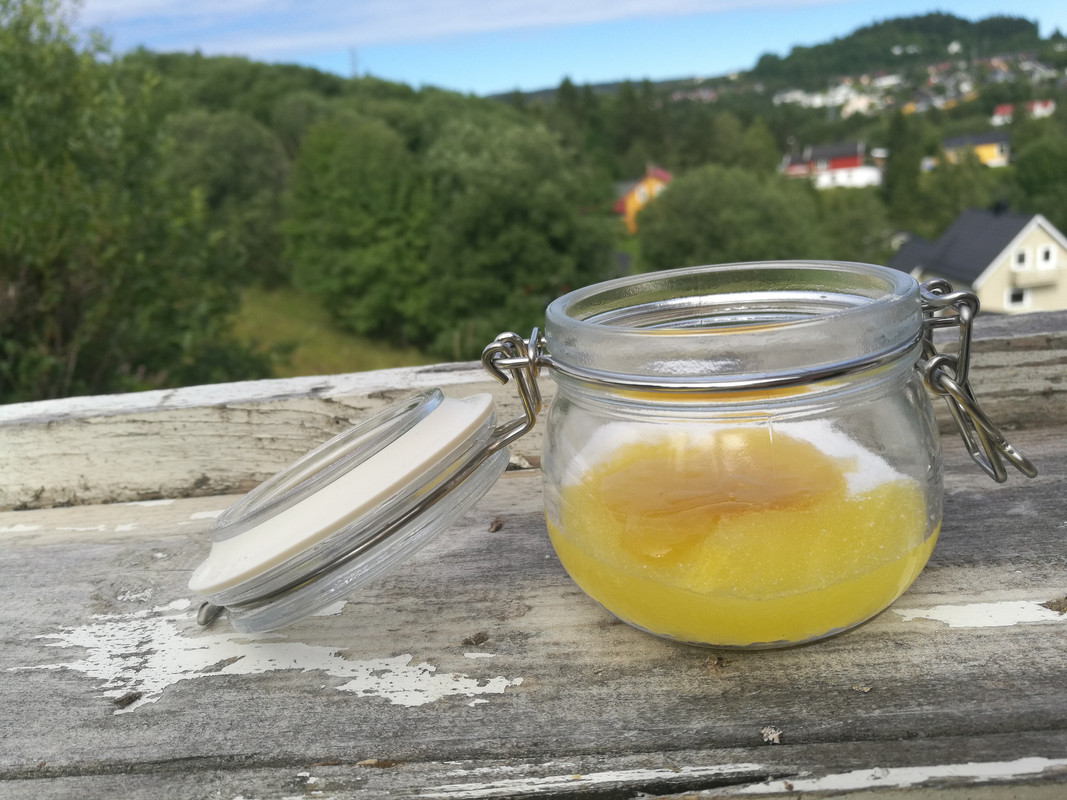
Body Sugar Scrub | Recipe

A body scrub helps remove dead skin from your body, and leaves it soft and smooth after use. Doing it yourself is also cheaper and creates less waste than if you were to buy portions of it from a store regularly. This recipe builds on two basic ingredients, sugar and oil. The scrub should be used fresh. Preferably, make a new one right before you use it, and only the amount of you need. The moment you add water to the mixture you create a perfect breeding ground for bacteria, so you do not want to let it sit.

The base (1 use)
3 tablespoons refined sugar 
1,5 tablespoon oil (I use olive oil. You can change the oil after what you want it to do.)


Additions (1 use)
1 teaspoon honey. Honey is a humectant so it will help moisturize your skin. Honey does also naturally includes AHA which helps exfoliate and make your skin absorb more moisture. 

 1 teaspoon lemon juice. Lemon can help with making scars less visible by evening out your skin tone and is antibacterial. It is also acidic, which makes it unsuited for use before prolonged sun exposure.

A few drops of essential Oils.  It adds the properties of the essential oils you add as well as scent to the scrub. Essential oils can be beneficial, but the amount and how long the product sits on your body will affect the benefits you might get from it. Essential oils are generally expensive, and prone to being adulterated. Make sure to buy them from a site you trust so you don't get any unsafe, unwanted ingredients in it you can't even spot. Essential Oils are created by distilling liquid from a big amount of (often aromatic) plants where even a little needs a lot of resources to create. Before you use essential oils you should always test them on your arm for about 20 minutes to make sure you don't react to them.

Thank you, for being here! I hope you found this useful! 


Zero Waste stores in Norway

Norwegian stores for Zero Waste, Plastic-Free and Organic products for most of what you'd need at home.


B

BeeOrganic.no - "Nettbutikk med miljøvennelige, økologiske or rene produkter." Generelt godt utvalg av Zero Waste alternativer. Har også sitt eget varmemerke kalt "Peach" i sortimentet.


BasicallyPlasticFree.com - "NORGES FØRSTE 100% PLASTFRIE NETTBUTIKK! Opptatt av kvalitet, bærekraft, dyrs rettigheter og planeten vår."


E

Zana - Økologiske og miljøvennelige alternativer. Refill muligheter til såpe, sjampoo og balsam. Salg av matvarer i løsvekt (pasta, ris, sjokolade, korn, nøtter, osv.) 

Fysiske butikker: Trondheim. Har nylig byttet navn til Zana fra Etikken. Du kan ta med egen beholder for løsvekt!

Slo konkurs i Mars, 2023. Kjøpt opp og holder fortsatt åpent.


F

Fat og Fe - "Økologisk gårdsbruk og kolonial i Sandefjord."


G

Greenspirit.no - "Økologisk og vegansk kosmetikk på nett!" Selger noe gjenbrukbare alternativer og refills, f.eks. merket Zao.

Greenhouse.eco - Sustainably produced clothes, interior, jewelry, and zero waste items.


L

LessTrash.no - "Litt lettere å ta grønne valg." LessTrash har et noe begrenset utvalg merker innen husrengjøring, grill og mat oppbevaring (bivokspapir, handlenett). De selger også små solcelle paneler for mobil lading på tur, ol.

LushNorge.no - "Fersk Håndlaget Kosmetikk." God for emballasjefrie sjampoo, balsam og såpebarer og lignende.

Fysiske butikker: Oslo, Trondheim, Bergen, Hafsfjord, Stavanger og Sandvika.

Slo Norsk konkurs i Mars, 2023. En butikk i Norge blir værende.

Litt Grønnere.com - Helt ny zero waste butikk som redesignet gammel tekstil til bivoks og andre oppbevarings produkter som erstatter plast. 

U

Unwrapped.no - "Sørlandets første Zero Waste butikk og cafe. Tilbyr plastfrie, økologiske og lokale alternativer. Selger også produkter i løsvekt."

Fysiske butikker: Unwrapped har to fysiske utsalgssteder. En i Arendal og en i Kristiansand.


T

Tisebasics.com - Tilbyr "Grønnere hverdagsprodukter." Inkluderer en mengde zero waste gjennbruksalternativer, undertøy, hygiendeprodukter, mobildeksel, og lignende.


updated november 2024

Low Impact Laundry

The "in-use" stage of a garment's lifespan represents one-fourth of the total impact of our clothing. How long we keep our clothes and actively wear them can reduce the impact they have on the environment. It's estimated that a garment in the United Kingdom lasts about 2.2 years before being discarded. The 2012 Wrap rapport showed that if we extend the time we use our clothing by 33% (9 months, based on the average use being 2.2 years) it is possible to reduce the total carbon footprint of our clothing by 27%. How often we wash and tumble dry, the fiber content, temperature, and detergents used are important values making out the total impact. To make this into practical solutions, I collected a handful of ways to do laundry that prioritizes its lastingness and impact on the environment.
HOW TO CLEAN MORE GENTLY
Spot clean & air-freshen. Often, clothes don't need to go straight into the washing machine. Instead, it can be enough to spot clean or air-freshen a garment so you can use them more before you wash them. Most people wash their clothes too often, or unnecessarily, something that reduces the lifespan of the garment, removes dye faster, and lowers the fiber quality.

Hang to dry. Tumble drying is energy-intensive and can be substituted for air-drying clothes on a rack. Washing and drying our clothing makes up about 10% of the total CO₂ emission of cars in the UK. Air-drying can be done outside all year round, or inside. For people not used to this practice, drying time is normally between 1-3 days indoors, possibly more during the winter months and shorter during summer. Some textiles benefit from being air-dried or laid out flat to dry. It helps preserve their shape and can reduce wrinkles. Hanging to dry saves both money and electricity.

Change your washing detergent to a non-toxic, "eco-friendly" alternative. Washing detergents can directly affect marine life as many include harmful or toxic components that accumulate in the water bodies or living organisms. These components can have a negative effect on our bodies and health when they absorb into our skin through the wear of our garments. Phosphorus is one ingredient to look out for that is known to cause water pollution and is linked to heart disease. In water, Phosphorus can create algae bloom and suffocate small water bodies or rivers. You also want to avoid 1,4-Dioxane and phthalates.They are known to be endocrine disruptive and human carcinogenic. They can cause serious illness with long-term air exposure or consumption.

Some will avoid a variety of other chemicals (the list of options are long) for different reasons. Some are oil derivatives, fragrances, or other chemicals linked to disrupting or harming organisms. A handful of examples of these are ammonia, nonylphenol ethoxylate, phenols, and Sodium Laurel Sulfates (SLS). Avoiding all of them is a rather large task, and settling for a trade-off is oftenmost the reality.

Some natural alternatives to conventional detergents are: Bio-D laundry powder, laundry washing strips or sheets (e.g.TruEarth or kind lauder), CleanCult, and the EcoEgg. Some people use soapnuts or DIY\old recipes. The positive about eco-friendly detergents is that they are gentler with your garment by using less harsh ingredients. That may however fire back if you have deep stains or smells set into the garment long before wash. That's a consideration you have to make for yourself and your lifestyle.

Wash at lower temperatures. Heating the water in the washing machine uses up to 90% of all the energy in a washing cycle. Lowering the temperatures on most washes to 30-40 degrees helps reduce energy usage and CO emissions. Some items you may want to wash at higher temperatures (bedsheets, underwear, and towels). Activewear is also an option, however, one should be aware that the higher the temperature used on synthetic fibers, the more microplastic it sheds in the wash. It is understandable that 30-40 degrees may be too low for some, and we got to do what works for our lifestyle and equipment. However, before the idea gets disregarded, try it out with certain types of clothes and maybe you find a way to wash some of your clothes at a lower temperature.
Read the label. Read the label so you know what temperature and sort of wash each garment are suited for. There's no problem mixing clothes at lower temperatures than what the label says, just be aware to not go higher than the lowest one in the batch. Preferably, wash similar colors together, at least separate out white to keep the white looking white, and to not wash brand clothes with light-colored clothes when they are a darker color. They are likely going to color the lighter pieces.

If you're unsure of what some labels mean, Love Your Clothes have a guide to understanding care labels.

Use a guppy bag or filter to reduce the microplastics from a wash. Everything from a few thousand to several million microfibers may be released in one wash. If you use a washing bag or install a microfiber filter you can reduce the impact of your synthetic clothing by keeping what you reasonably can out of the wastewater and the sea. If you concurrently limit your purchase of new synthetic clothing you're taking it a step further. However, don't look blindly at this statement. Just because textile is made of natural fibers, it's not necessarily better for the planet. Conventional cotton, for example, has a massive environmental impact that should not be overlooked. As well does denim and leather.

FURTHER RESOURCES
  • Love Your Clothes is a British campaign aiming to help reduce the impact our clothing has on the environment. It is full of advice on how better to take care of our clothing through wash, repair and reuse.
  • The website, Scandinavian Standard, has an article titled "The Ultimate Guide to Sustainably Caring For Your Clothes(2019)." It's a good place to start to explore more alternatives to promote the longevity of your garments.

HOW TO CONSUME BOOKS MORE RESPONSIBLE & SUSTAINABLE

 This is a repost from my old blog. A slice of history, and may not fully reflect my current understandings or approaches of the topic.

This post is not written with the goal that you should stop buying physical copies of books firsthand entirely. Instead, it aims to give ideas of how you can limit your impact by being more conscious about which books you consume, how and how many. Pick which may work for you. However, this post is written as a nudge against the sheer overconsumption and materialism happening in and encouraged in the online book community. Nonetheless, here are 15 considerations to make when you want to consume books more sustainably.


1. Reduce the number of books you buy first-hand. First-hand books are great. Smell nice, look nice, they let you be a part of the hype trains but they cost and aren't that good for the environment. Producing a book from mining materials to finished copy contains a lot of resources. To mention one, a cause of deforestation which often leads to a loss in biodiversity. Most publisher houses have green certificates (trees), and I think it is important to keep an eye on them so you know what you're supporting when you buy a new, pristine book. Having had the history with books that I have, only one book has a piece of written information on it saying that it is printed on recycled paper. One. Book. And I wouldn't notice it if it wasn't stated.
-
2. Buy second-hand, especially if you're looking for backlisted titles. By purchasing second-hand you'll take books out of a waste stream than contributing to it by purchasing a brand new copy. Personally, I think second-hand is wonderful if you're looking for older titles or classics. They'll most likely be easier to find.
-
3. Buy & read on devices you already own. For example, audiobooks, and e-books on your phone. E-books on your Kindle or any electronic device that support it. What I've learned from "alternative" copies of books is that I'm not particularly fond of e-books, but I love audiobooks. E-books have always been this return to the screen that I sought away when I started reading again. Reading was a break, not more screen-time. However, e-books are in-handy when you're out traveling, want a book cheaper, don't have that space or time to pick up a book in-store, etc. It also saves a lot of resources that would go into a physical copy of the same book.
-
4. Limit yourself to 1 copy of each book. Personally, I can't see why you would want all the edition of the same book. It's a lot of money on the same content that I feel could be used better. In new editions, you're often offered never-before-seen content from a world you probably love, and as tempting as it can be, it would most likely also exist as an e-book or files or not be as grand as you hoped. Special Editions or Collector Editions is another type that builds on the same principle of making you desire another copy because you're offered something new in it, fx. a novella, bonus content, new cover or cool illustrations. I think collector editions are the ones that most prominently scream: I wanna sit on your shelf. To just sit there collected. I mean, you have probably already read the book and from my own experience, I won't be reading it again very soon or find that it offers me more than short-lived satisfaction that comes with most buys. 
-
5. Donate, sell or gift books you no longer have any use for or want. This one doesn't need a lot of explanation. It's pretty simple. When you find yourself with a book you no longer desire or need, giving it a second life is the best way to go. Donate it, sell it, gift it to someone you think will like it. Just keep it out of the waste stream as long as you can. You can probably reuse it if you're creative as well. Make art, use the pages as props, paint it etc. 
-
6. Use your library so you don't have to purchase your own copy. Libraries are probably one of the best places to go if you don't want to purchase your own copy of a book. It uses so much fewer resources and it reaches a lot of people by offering the same copies up to all visitors. It's wonderful and it let you save money on reading as well.
-
7. Lend your books to people you trust and borrow from them. Don't just let the book sit when you're done with it. Most likely, I'd have a greater value in the hands of someone that can enjoy it than just sitting on a shelf.
-
8. Don't cover buy if you hate it. This one is especially directed at bookstagram. Cover-buy is a phenomenon that you will come across. It's a book that has the most stunning appearance, but you may not just be as infatuated by the interior. To speak about my own cover-buys, I would insist that most of them were bad choices. They weren't finished and now they are angry at me because I don't treasure them as I should.
-
9. Make sure you genuinely want the book you purchase & that someone didn't influence you to get a book you don't think you'll like. This one intersects with #8. You need to look beyond the facade of a book, to put it away, and thereafter make the choice if a book is for you. Despite it being popular or aesthetic. Factors that often draws people towards a read. 
-
10. Buy local or in-store if you can. Books you buy in-store has already been shipped so you don't have to get one shipped all the way from a warehouse just for you. I think this is very easy to notice when you don't live in the countries that publish the books you want to read. The shipping time is a good indicator that it traveled a long way to get there, and it costs the environment in emissions as well as packaging. If you find yourself needing a book that isn't in-store, look for online retailers based in your own country.
-
11. Foreign editions: wait until they come to a retailer in your country, in-store or is available secondhand. 
-
12. Bulk buy instead of single purchases to reduce packaging & shipping. I believe the amount of emission made in shipping increase by ever kg of weight, so if you know there are several books you want then buy them at the same time to get them in less packaging and to make the most use of the emission that you spend on shipping.
-
13. Choose green shipping options if available. They will often take a longer time, but if you have control over when you need a book if you need a book to a special occasion, planning makes this super easy. As well, do some retailers offer plastic-free packaging if you request it.
-
14. Recognize that the publishing industry like all industry is driven by consumerism. It's far from a secret and it envelopes all industry. They want to profit and there's a lot of ways they do so. Some, I've already mentioned. Here your role would be to be conscious of what your book buying habits mean for you and the planet and to try and make more responsible choices when you can. Some can be some of the points I've already mentioned, or others that you figure on the way.
-
15. Do you really need all the merch? Only collect and purchase the effects which hold real value to you. If it is just going to be stored in a box under your bed, it is most likely not worth it. A lot of the time, we're lured into purchasing a book or another copy of a book for these "special effects." Figure for yourself if they are worth it.
-

Want to share the message?
Reblog the post on Tumblr!


HOW TO SPOT GREENWASHING 101

This is a repost from my old  blog and may not reflect my current understandings of the topics discussed.

This is an updated guide to greenwashing from my original 2019 post.

Greenwashing is when companies make more effort to appear sustainable through their advertisement and marketing than their practices actually reflect. It is a way to jump on the "sustainability trend" and to encourage consumers who want to shop more sustainably to shop at them instead of brands that genuinely care for the people and environment. Sustainable Collections like Conscious by H&M, Aware by Vero Moda, or Primark's Wellness Collections are examples.

Over the last years, spotting greenwashing has become increasingly more difficult. More brands have jumped on the train to appear green or more ethical. They may add a location of assembly, a percentage of recycled materials into their products, or add "sustainability policies" to their website where they tell you everything they want to do and care about. While these are not bad beginnings, they do not necessarily reflect the reality behind the brand's marketing surface. This is where learning to spot greenwashing is an increasingly useful tool. It helps you decide if the claims they make have a hold.

Sustainability is on a spectrum 
Sustainability exists on a spectrum. It isn't really that one brand is sustainable while another one is not. There isn't one perfect brand out there as fashion is not an industry that leaves a positive impact on the planet. Rather, we have plenty that makes different efforts towards more sustainable practices on different levels (and those who are failing entirely.) This means you may have to compromise and prioritize your values when you want to purchase something firsthand. Maybe you only want to buy natural fibers and have to opt for conventional cotton over synthetics, or maybe only recycled fibers but there's not any that truly contain 100%? Good ethics or the most sustainable materials? There's not a perfect way to do any of this, and what you can access is personal. The best you can do is your best at the given moment. (Personally, I think this starts with learning about the industry and what goes into your clothing, but that's an entirely different topic.)


 How to spot greenwashing 101

1. Go to their site and read what they have to say about their own environmental impact and responsibilities, and ethical considerations. How much transparency do they have? Are workers getting paid fairly? Do you get any information about their workers and workplaces? Where are their factories located? What materials are their clothes made out of? How are these raw materials sourced? Which processes are used? How much are they producing? And are any of their claims certified by an independent 3rd party? (You can't really certify yourself unbiased.) 

You want to know as much as possible, and for the knowledge to be positive. Workers should have fair pay and basic human rights. None should go to their work without proper safety equipment. Location is important because it gives an indicator of that country's minimum pay and generally how they have treated workers' rights and safety in the past. What your clothes are made out of is about which impact the production of that raw material takes. Conventional cotton is incredibly intensive in water and pesticides, synthetics are an oil-derivative. Organic means agriculture practices that work more with nature, without pesticides, and uses less water. Linen and hemp are plants that manage well with little resources. Bamboo (Lyocell) uses a lot of chemicals to be broken down into the soft material it is from wood. The same goes for Viscose, and so on.

Look for good certifications like:

› OEKO-TEX®: 
› Eco-Cert
› Global Organic Textile Standard (GOTS)
› Global Recycling Standard (GRS)  
› SA8000: 
› BlueSign®  
› Cradle to Cradle
and many more. Here's a list.

Choose materials like:
› Recycled or deadstock materials (especially for animal-derived materials, plastic, and cotton)
› Regenerative or organic
› Linen, Hemp
› Lyocell, Viscose 
› Tencel

Some online retailers are notoriously fast fashion and meet none of these requirements. I want to make it easy by naming a few: Shein, Rombew, Zaful. If you look at their sites you will find no information about the production, ethical treatment, and the majority of the clothes are made from plastic. The pictures are often taken from other creators as well. If you're lucky, your order shows up in the mail after a while, but you have technically no idea what it is made of or if the description even is genuine in the first place. What goes into their dyes, how are the workers treated, are they paid a fair living wage, how are the animals treated? You simply won't know. Personally, it's not something I would risk knowing our skin is our largest organ that absorbs 60-70% of what it touches.

2. Notice their wording. The wording is important when you want to know if someone actually is doing something or if they only aim to do something in the future. Setting goals and postponing them when the goal-year has passed and they failed is something that could have been taken straight out of politics. When a brand says they "want to work towards something at x year" or "reach x goal by x year" this is not telling you anything about what they're actually doing right now or if they ever will accomplish it. Ask: Are they saying something about how they want to accomplish this? Are they showing the results of the works they already have done to reach that goal in time? Or are there just words and nothing more? 

3. Browse their catalog to see what their shop actually reflects. Pick a handful of various products and look at the details. What are they made out of? How many percentages of each material?  Where was it made? What else does it say about the material? Is it open and want to explain to you how something is produced or more closed off and secretive? Does it say anything at all? Does it tell you how to properly take care of the garment?

When I buy new garments I aim to buy them as "clean" as possible. By this I mean that I do not want mixed materials, e.g. 50% synthetics and 50% organic cotton if I don't have to. Mixed materials are generally not recyclable which means your garment will be burned or downcycled when you choose to dispose of it. (Hopefully, in a very long time since you have to address longevity in your own care for the garment to make it sustainable.) Additionally, I try to stay away from synthetics in clothing that I feel do not need it. Instead, I will choose recycled alternatives (certified or ECONYL, as recycled plastic may come from firsthand plastic bottles made simply to be recycled) in swimwear and sportswear where the qualities of synthetic materials have a stronger purpose. We are living with a plastic problem and one way to deal with it is to reuse it, and not support the overproduction of virgin materials. However, it is not unproblematic as even recycled plastic items shed microfibers and need some virgin fibers to make the recycled fibers usable. If you can, aim to wash it as little as reasonably, at low temperature, and use an eco-friendly detergent. If you can afford it purchase a microfiber collecting bag or filter when you wash it, e.g. Guppy Friend, to collect up most of the microfibers that release from your garments during a wash. Hang to dry.


4. Are they taking responsibility for the repair and disposal\reuse of their products?

Most brands produce something and then it's up to the consumer to dispose of it when they're done wearing it. Most products are not recyclable and will therefore end up as waste in a landfill or burned instead of being reused or recycled. The future of the fashion industry is circular. This means brands have to take responsibility for the end-of-life treatment of what they produce and not be okay with the excess waste being shipped to poorer countries or burned without a second glanze. Does this brand let you send your used garments back so they can better dispose or reuse them? Do they offer repairs if something breaks? Both are something that should be in the interests of brands that truly care about sustainability.


5. Are they inclusive? Are they respectful of cultural items and garments?

A brand also has to take into consideration its audience, and the people they profit off. If they are only selling clothes in sizes XS-L they are not really being inclusive, and how can the sustainable fashion industry being sustainable and ethical if it only caters to a certain part of the population? Most of all, accessible? The same goes for those who are allowed to model their products, how people are treated at HQ, and so on. The latter is difficult to know and rather is a question of what comes out 'later' than what you as a consumer know right now. However, you can look up controversies around a brand by simply googling it and see if it has had any rundowns around this. If so, how did they deal with it? Does the brand respect cultural garments and accessories, or are they ripping them off with no consideration for or cooperating with the minority groups they represent?


6. Are they giving back? 

Giving back is not something all brands can do, especially smaller ones. It costs, and sometimes you are just trying to survive on the market. However, there are different things brands can support to actively support sustainability projects, ethical treatment, and so on in issues related to the industry. Some are being Certified B-corporation and 1% for the Planet, or humaniterian projects. They do not alone tell you if a brand is sustainable or not thought. Some will check if they offset their carbon emission for transportation, for example, however personally I don't believe carbon offsetting to be particularly effective so it's not something I weigh heavily.

Regardless of what you are buying, overconsumption is never sustainable. Consider if you need something new if you can get it secondhand, DIY with something you already have, or by swapping with someone before you buy it brand new. Those are always a more sustainable solution than firsthand consumption. Even sustainable brands.  Half of the impact of your clothing is the responsibility of the brand. The other half is up to you. The most impactful consumer action is longevity.

THOUGHTS ON ZERO WASTE

This is a repost. A sliver of history. Statements made in this post do not necessarily reflect my current understandings of the topics discussed.

“The conservation of all resources by means of responsible production, consumption, reuse, and recovery of products, packaging, and materials without burning and with no discharges to land, water, or air that threaten the environment or human health" (SWIA, 2018). 


Zero Waste is a waste movement aiming to reduce as much waste from a person's lifestyle as reasonable, with the goal of reaching a circular economy and "zero" waste. It builds on the 7 R's of Sustainability to do so: Refuse, Reduce, Repurpose, Reuse, Recycle, Rot, and Rethink. We're currently dealing with a linear economic system, meaning that items are produced to be wasted in the end. Zero Waste is originally an industrial term aimed at large corporations but started taking hold as an individual movement a few years ago.


Zero Waste is a way of returning value to all the things we consume. Zero Waste is a way of being attentive to how we spend our resources and of the toll of using and consuming them leaves. It's also a relatively whitewashed, elitist, and aesthetically driven movement on social media. The popular media consider it a trend, but zero waste is not another consumer lifestyle. You can't consume yourself into a sustainable lifestyle when the bottom line is that we're already consuming too much. That's why the first rule of zero waste is to use what you already own. When it is empty you can buy something new, and when you do, choose better based on the sustainable principles above.


Zero Waste, being a waste movement, does not have an incredibly high impact on climate breakdown on its own. Most of the people that regularly are speaking up about zero waste are doing other measures to limit their personal greenhouse gas emissions in other parts of their life as well. For many reducing their impact has meant going vegan or vegetarian, using collective transportation, thrifting, not buying things you don't need, source your purchases to local, ethical and sustainable businesses and brands, composting, and more. Others speak up about issues of injustice and environmentalism. It is important to vote people that care for the environment into positions of power, protesting against both environmental and social injustice (as there is no environmental justice without social justice), and boycotting unethical and unsustainable brands of all sorts - fashion, makeup, drinks\food, and so on. 


Only 100 fossil fuel-producing corporations in the world were responsible for 71% of the world's greenhouse-gas emissions in a number of major sectors, e.g. energy, transportation, and food, between 1988 and 2015 (Griffin, 2017). This means, that what we do as individuals are small victories. We have a necessity for big corporations to take actions to reduce their own impact and treat workers equally and fairly. Some of that we can do by spending our money wisely and putting public pressure on them to change through petitions, protests, and social media call-outs and spreading information about the murkier sides of the industries. 


Zero is an unattainable standard as we are working within the frameworks of a system that does not support these values. That's one of the reasons why many have gone from the term "zero waste" to terms like "low impact" and "low waste." It's simply more inclusive and respects the process of taking steps into a new lifestyle as a marathon, not a race nor something that any of us are likely to perfect. Neither do Zero Waste have to mean plastic-free, and so on. However, many who go zero waste also aim to go as plastic-free as possible.


It is important to underline what sustainability looks like online vs. what it is perceived and sold as online. Many stores and brands that aim to care for the environment have taken up zero waste items, or zero waste stores have come up with ridiculous items and more or less turned into the paradox of "consuming yourself into sustainability." As well, does social media paint it as an aesthetically pleasing movement, mainly carrying one pristine and calming expression. The truth is that Zero Waste looks different to everyone, and most of the time it doesn't look like staged photos online featuring products from "sustainable brands." Even sustainable brands are pushing new products to an already overflowing market, which makes thrifting the most sustainable solution out there.


This post was originally written in 2020.


Bibliography

⋆ SWIA (2018). Definition of Zero Waste. http://zwia.org/zero-waste-definition/

⋆ Griffin, Paul (2017). Carbon Majors Report. https://climateaccountability.org/pdf/CarbonMajorsRpt2017%20Jul17.pdf

MY FIRST YEAR GOING ZERO WASTE | JOURNAL

This is a repost from my previous blog. A slice of personal history and does not necessarily reflect all my opinions today.

def. Zero Waste is the conservation of all resources by means of responsible production, consumption, reuse, and recovery of all products, packaging, and materials, without burning them, and without discharges to land, water, or air that threaten the environment or human health.


When people talk about Zero Waste, the all or nothing way of thinking surfaces quickly. People often find the path a failure if you haven't done everything you can as fast as they think you should. For me, that has become an important though when I began my Zero Waste journey in spring last year. I didn't walk it intentionally in the beginning. I mostly looked for research about the environment. Instead, I was offered so much more, and it gave me a new perspective on waste and the way waste ruled my life. That's also why I've chosen to consider myself a part of the Low Impact Movement rather than the industrial term, Zero Waster.

The first month, I watched so many videos on zero-waste living until I felt like I knew it all. I quickly found that living a little bit more sustainable, didn't need to be as hard as I'd imagined it to be. It wasn't giving up on items I enjoyed or never sitting in a car again. I'd looked at it as giving up on luxuries and privileges, not these small swaps that were as easy as choosing natural alternatives above synthetic ones, prioritizing ethics over pleasure or just simply choosing long-lasting and reusable tools. 
My first swap action wasn't actually a swap. It was figuring where I had the largest need to make changes in my lifestyle, where most plastic needed to be switched out for natural and non-plastic alternatives when we ran out. I started with the bathroom because I already had one part done there - a bamboo toothbrush. 


In the videos I'd watched, two things were clear:

a) I shouldn't buy anything new before I'd used up what I already had   &

b) recycling what I already had and treasuring it by reuse or repair was a way to keep it out of the waste stream.

The first line spoke to me the most. It was so easy, yet it felt... unnatural. In my house, we never really needed anything. We had the finances to get what we wanted when we wanted it so we never suffered any need that I knew of. I didn't need to use up my shampoo bottle if it didn't fit my hair or we had bought a new one. We always had bottle after bottle in our cupboard, and I never thought twice about it... until that day I went looking and figured we had the scraps of more than 10 shampoo and conditioner bottles showed into a corner, taking up space, being resources we'd just trash the way we became tired of them toppling over when we tried to find something on the same shelve.

My first action was to sort it all. I took them out and put them in a bowl beside the shower. This way, we'd have to use them up before we bought anyone new. When it came up on our shopping list, I'd keep saying we already have it at home. Now, a year later, some still live in the red bowl while others have passed on. After a while, I decided that the natural aspect of something new was something I wanted to try. Now knowing how many chemicals that went into that plastic bottled product, I wasn't especially enthusiastic to use them. To tell the truth, they made me feel anxious. A product I'd used all my life and never thought twice about made me feel uneasy.

This was why my first swap was picking up a shampoo- and conditioner bar. A two-in-one solution that fit me from the first try. I was satisfied I didn't need to demand more plastic bottles into production for my hair products. That I didn't need the chemicals and still, my hair got just a clean as it used too. And it was this easy! 

When the first was done, I followed with several others. I switched to OrganicCup (most satisfying swap yet tbh),  got stainless-steel shaver, made my first DIY body butter, started using Coconut Oil for make-up remover and reusable towels for it. I got vegan wax paper for the kitchen and stainless steel straws. I thrifted my first items and brought my own cup and straw to my first drink on-the-go! Some of these were more successful than others and I think that's an important part of the process to figure what suits you and what not. To not lock ourselves in the trends that come and go. Despite zero waste often taking you out of the mainstream trends, it also, naturally, comes with its own versions of status inside the community - for example, glass jars.  

Zero Waste is impossible in today's society, and doing it well is often brought on by privileges as accessibility, availability, and economy. I knew I never would do it perfectly, at least not for many years to come, but then and there, I collected my resources and started in the small. In a way, I think that's all you can do. You can choose to start and then do as well as you can with what you have and constantly strive to improve when you have the resources to do so.

A journey of a thousand miles starts beneath one's feet' - Chinese proverb

My first year of "zero waste" didn't go perfectly. To take an example that most people have heard about, I had to switch my bamboo toothbrush for an electrical one. It wasn't doing the job therefore it needed to go. I chose an electrical toothbrush because they're some of the best out there and you just need to recharge them. If you take care of them, they'll last you a long time. 

What one year of zero waste has taught me, or reinstated, is that it isn't impossible to make a change. I have given the stuff I own a new value and me a new perspective on the consumerism I do. I purchase less and I choose natural, reusable, recyclable where I can. I've started to eat more fruits and vegetables and used it as an inspiration to try more new food than to stay in the line I've been taught all my life. Maybe, the most impactful mindset I've acquired is the understanding that what I support with my money matters and that I should remove my wants and look at my actual needs. There's a difference. 

For the year to come, I've put a goal of getting compost in our kitchen, possibly yard. It is something I wanted to do since last autumn but I never got the time (or money) to do so. I try to grow a few vegetables on my own and compost gives you really good soil to do so.

As for the time being, I study organic farming which elevates my interest in it. Together with zero waste, it has given me a broadened picture on how everything circulates in nature and how important it is to not only use our resources with responsibility but to reuse them in a way where resources don't go to waste and that you can benefit from doing so.